
Carriage Trade was created out of the need for an exhibition space responsive to cultural and social concerns which expands on the conventional models of the non-profit, commercial gallery, and museum, combining aspects of all three. With non-profits generally focusing on emerging artists, commercial galleries supporting individual careers, and museums often highlighting the most notable of these, Carriage Trade’s group show format reveals crucial influences, histories, and common interests among artists which exist regardless of their visibility or notoriety.
carriage trade
Please Support
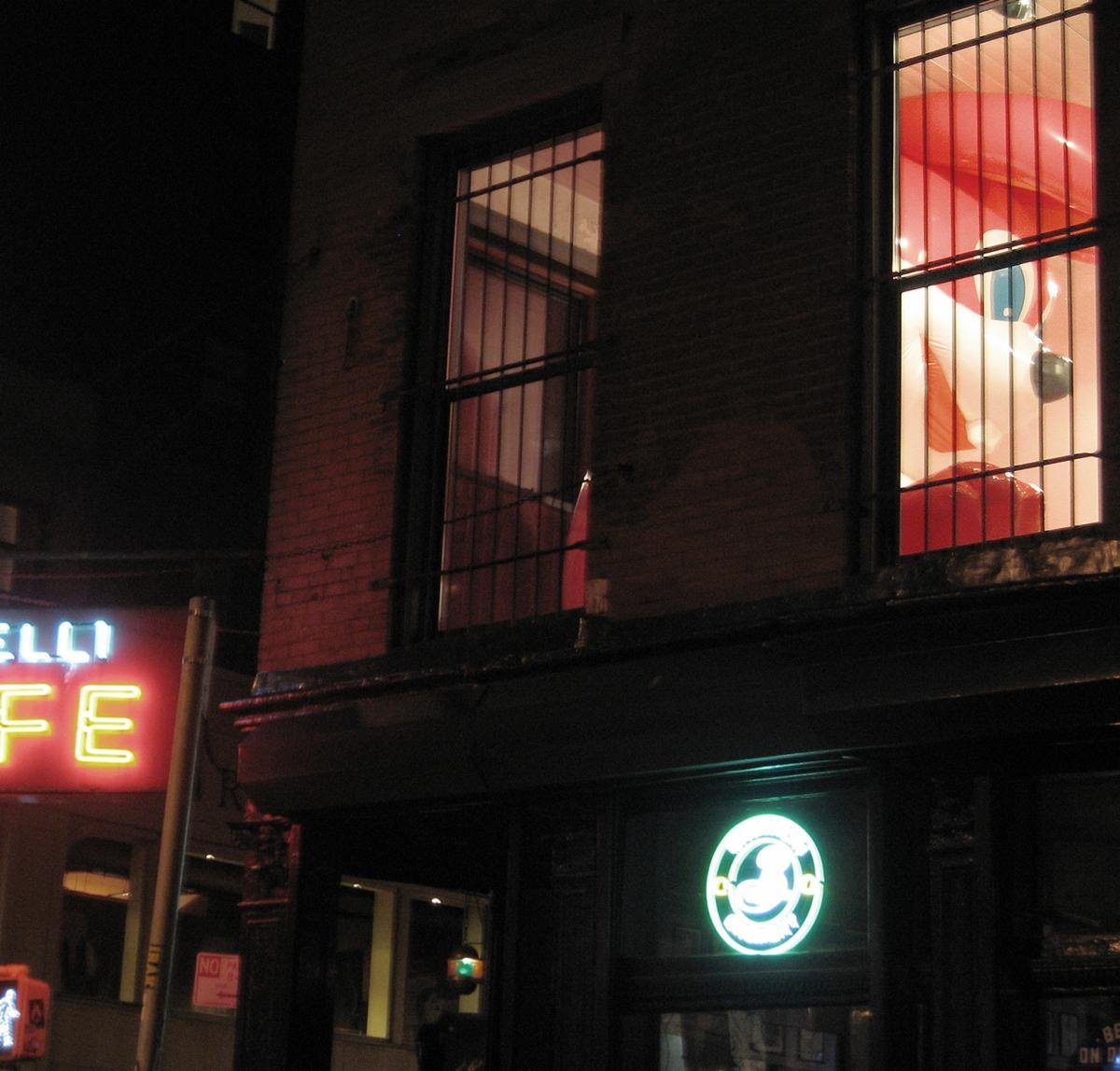
Exterior View of Fanelli's Cafe in Soho, 2008, Momoyo Torimitsu's Nanka Igokochi Waruinda (Somehow I don’t feel Comfortable), 2000, visible in the window.
Breaking with distinctions of emerging, mid-career, established, and historical art and artists, the thematic group exhibition allows for an emphasis on often-unseen links between the work of artists across generations, backgrounds, and geographies, offering a set of narrative structures intended to resonate with broader social, political, and aesthetic concerns that shape contemporary life and experience.
A Brief History of Carriage Trade
Opening above Fanelli’s Cafe in Soho in 2008, Carriage Trade's first shows addressed the relationship between politics and publicity (The Cult of Personality) and consumerism and land use (Market Forces, Part I: Consuming Territories & Part II: Consumer Confidence). Moving to 62 Walker Street in 2010 and acquiring non-profit status, the gallery produced shows which offered historical context for contemporary events (Color Photographs from the New Deal, 1939-1942 during Occupy Wall Street), projects that offered skeptical engagement with authorship and the art market (The first show of the pseudonymous artist Henry Codax), a museum exhibition of the Belgian artist Jef Geys which travelled from MOCAD in Detroit, and Mistaken Identity, which incorporated cases of the non-profit law firm The Innocence Project, which defends the wrongfully accused, alongside the work of Dan Graham, Carol Irving, John Schabel, Karen Yama, and The Yes Men.
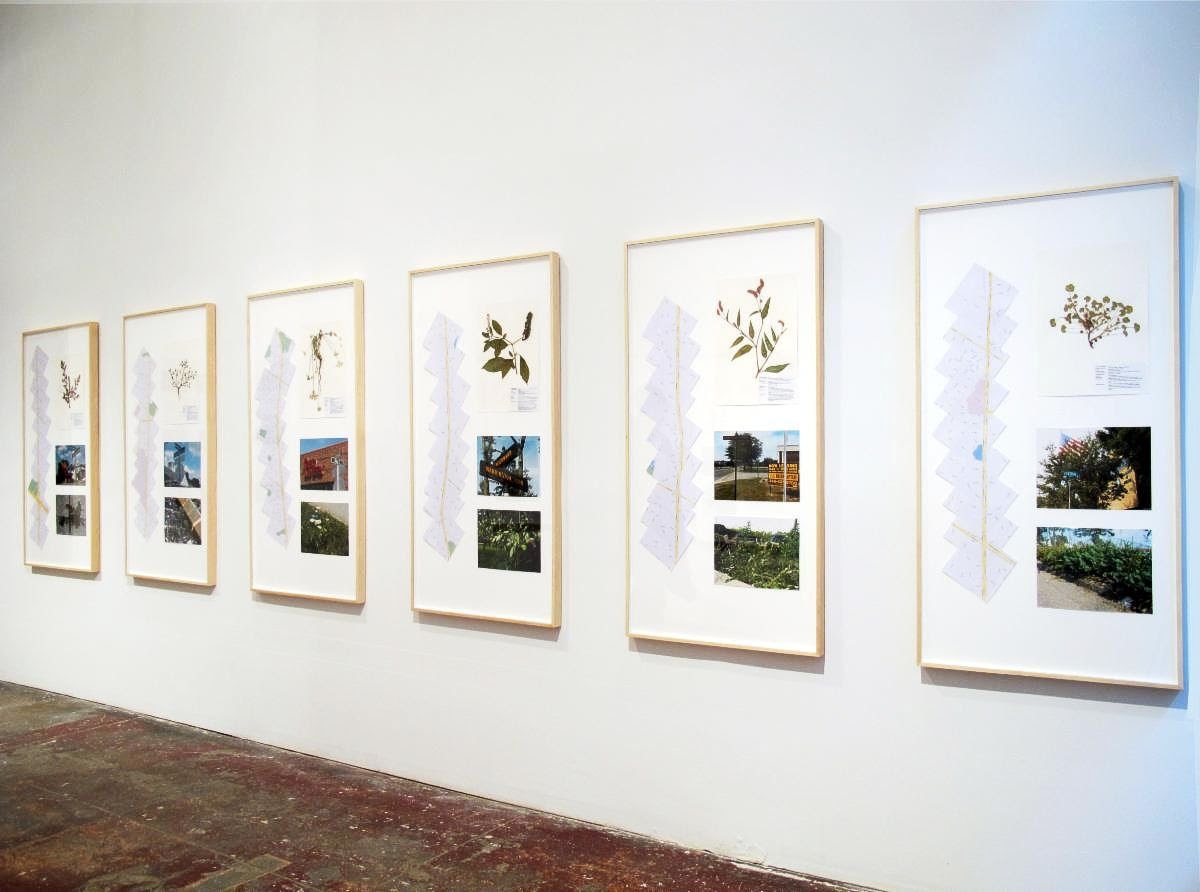
Installation View, Jef Geys, Woodward Avenue, carriage trade, 2011
Carriage Trade’s first exhibition after moving to Grand Street in 2017 was American Interior, an exhibition examining the American interior as a private, geographic, and psychic space in the wake of the 2016 election, incorporating the work of contemporary and historical artists including Richard Artschwager, David Baskin, Lawrence Berzon, Julien Bismuth, Richard Bosman, Barbara Ess, Terence Gower, Dorothea Lange, Louise Lawler, Sherrie Levine, Paul McCarthy, Bill Owens, Gordon Parks, Heidi Schlatter, Claudia Sohrens, and Steel Stillman.
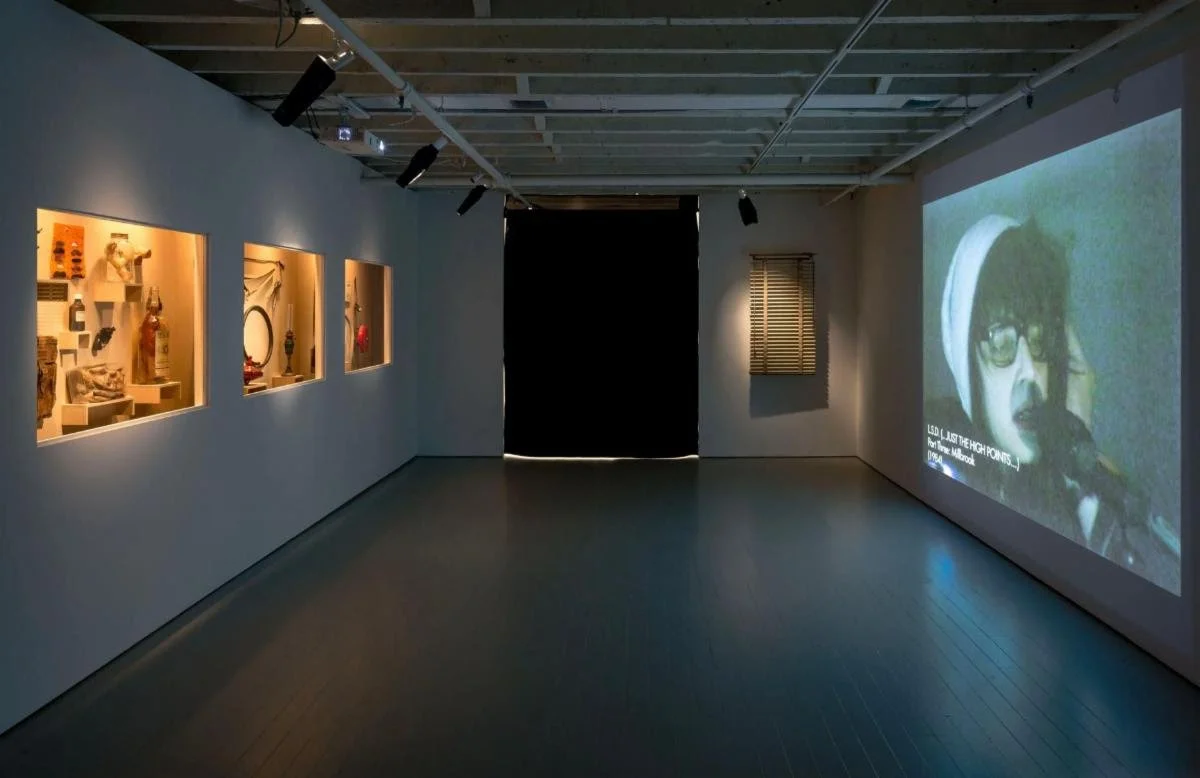
Installation View, The Wooster Group, carriage trade, 2020, photo: Nicholas Knight
With programming that combines small survey shows (Carriage Trade produced the first shows in New York of the pioneer architect and theorist Denise Scott Brown, the avant-garde theatre group The Wooster Group, and the artist/activists The Yes Men), with thematic group exhibitions, Carriage Trade’s eight years on Grand Street has featured exhibitions on a range of critical issues of our time. On Television, examined mass media's societal influence across ever shifting platforms, technologies, and devices, and included the work of Ant Farm, Gretchen Bender, Skip Blumberg, Eli Coplan, Stan Douglas, Barbara Ess, Harun Farocki, Lee Friedlander, Takeshi Murata, Muntadas and Reese, Radical Software, Aldo Tambellini, and Not Channel Zero.
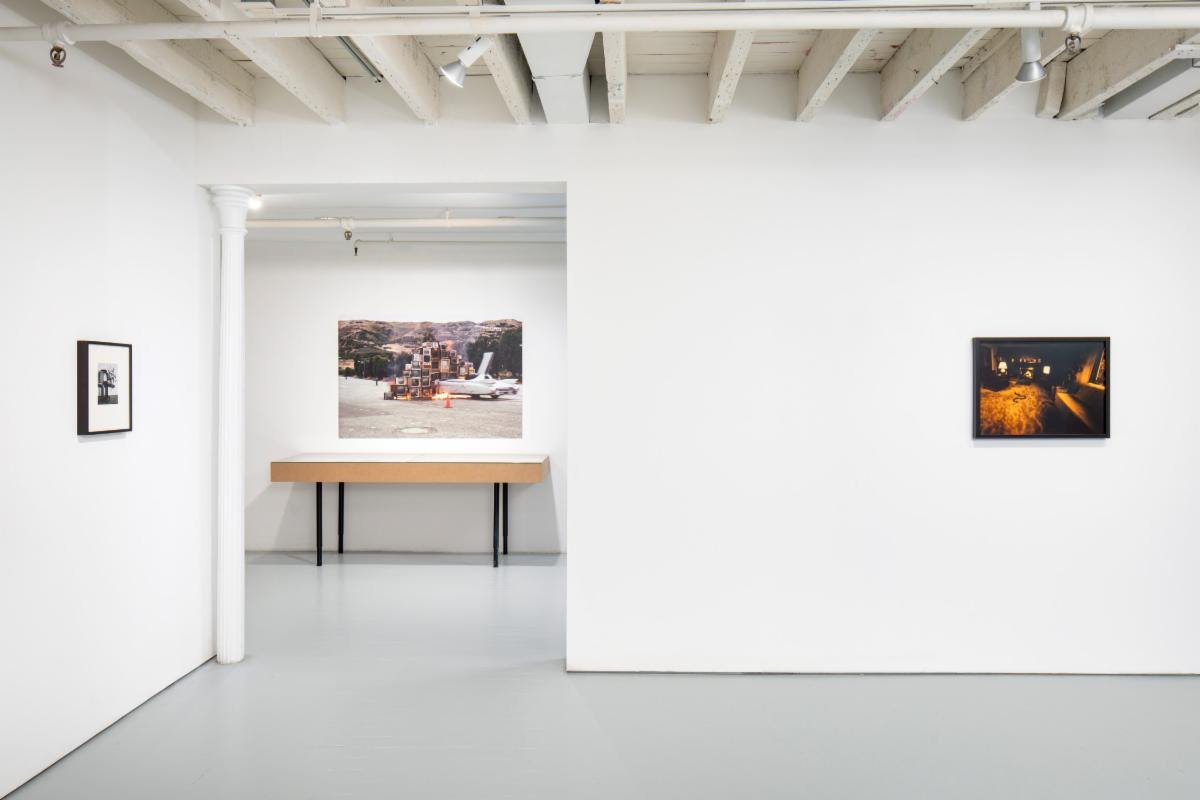
Installation View, On Television, carriage trade, 2024, Photo: Nicholas Knight.
The Madness of Crowds addressed the increasing tribalization of culture and featured Carl Theodore Dreyer's silent film The Passion of Joan of Arc alongside the work of Ken Gonzales-Day, David Howe, Sigmar Polke, Zoe Pettijohn Schade, Rosemarie Trockel, and Weegee.
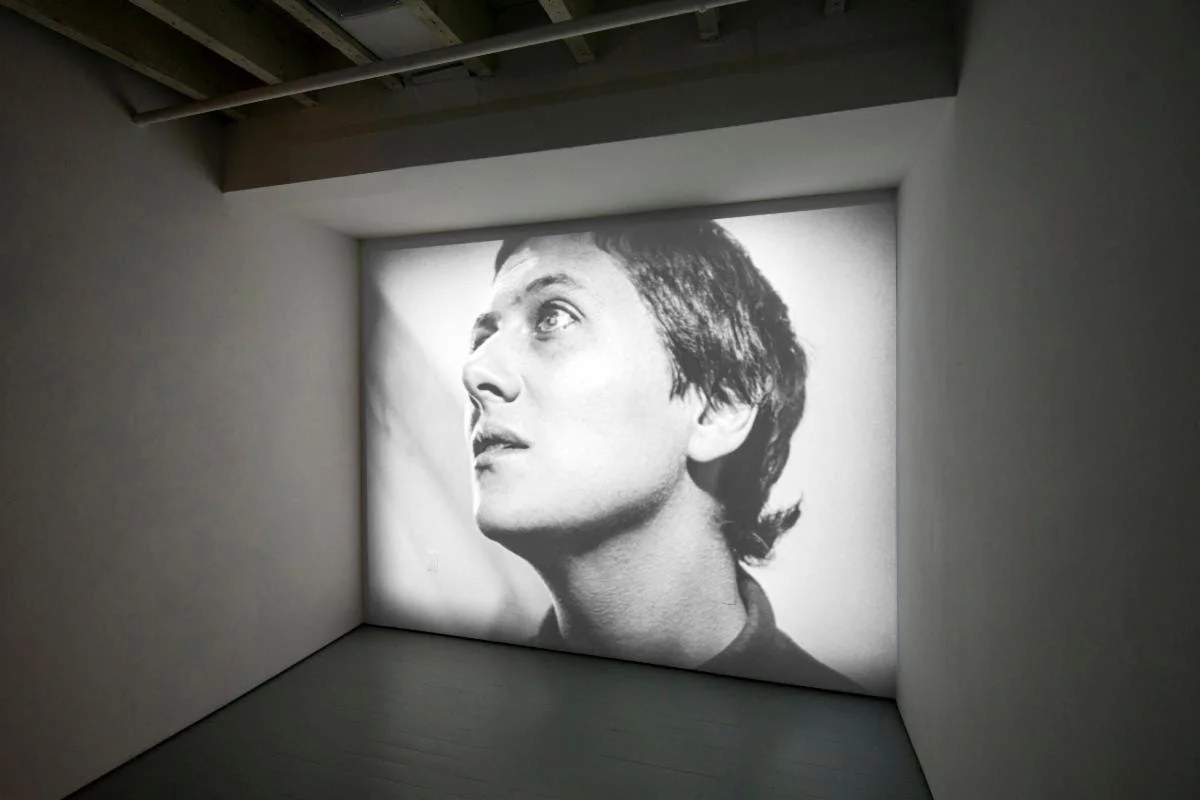
Installation View, Carl Theodor Dreyer, The Passion of Joan of Arc, 1928, film, 81 minutes, black and white, Courtesy of Janus Films. The Madness of Crowds, carriage trade, 2024, Photo: Nicholas Knight
Ho Tam’s Haircut 100, was a block-by-block photo archive of hair salons in Chinatown, incorporating the sensitivity of Jane Jacob’s classic urbanism and the meandering logic and mapping of the Situationists. Originally produced as a book, Haircut 100 was re-presented as a mural installation at Carriage Trade.
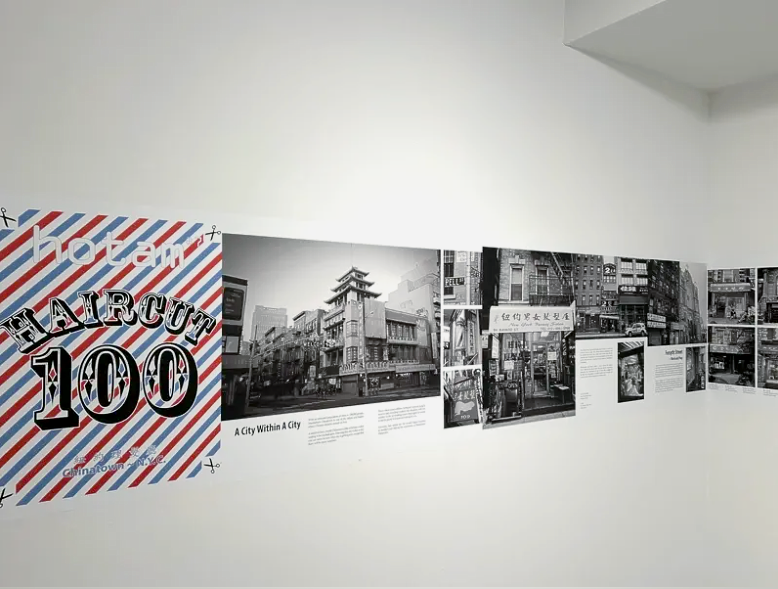
Ho Tam, Haircut 100, carriage trade, 2025
Carriage Trade's most recent exhibition, Rich Land, Poor Land focused on the politics of landscape and land expropriation, with work by Ansel Adams, Michael Ashkin, Ilana Harris-Babou, The Center for Land Use Interpretation, Jane Crawford and Robert Fiore, Dorothea Lange, Arthur Rothstein, Nancy Holt and Robert Smithson, Yiyao Tang, and The Yes Men.
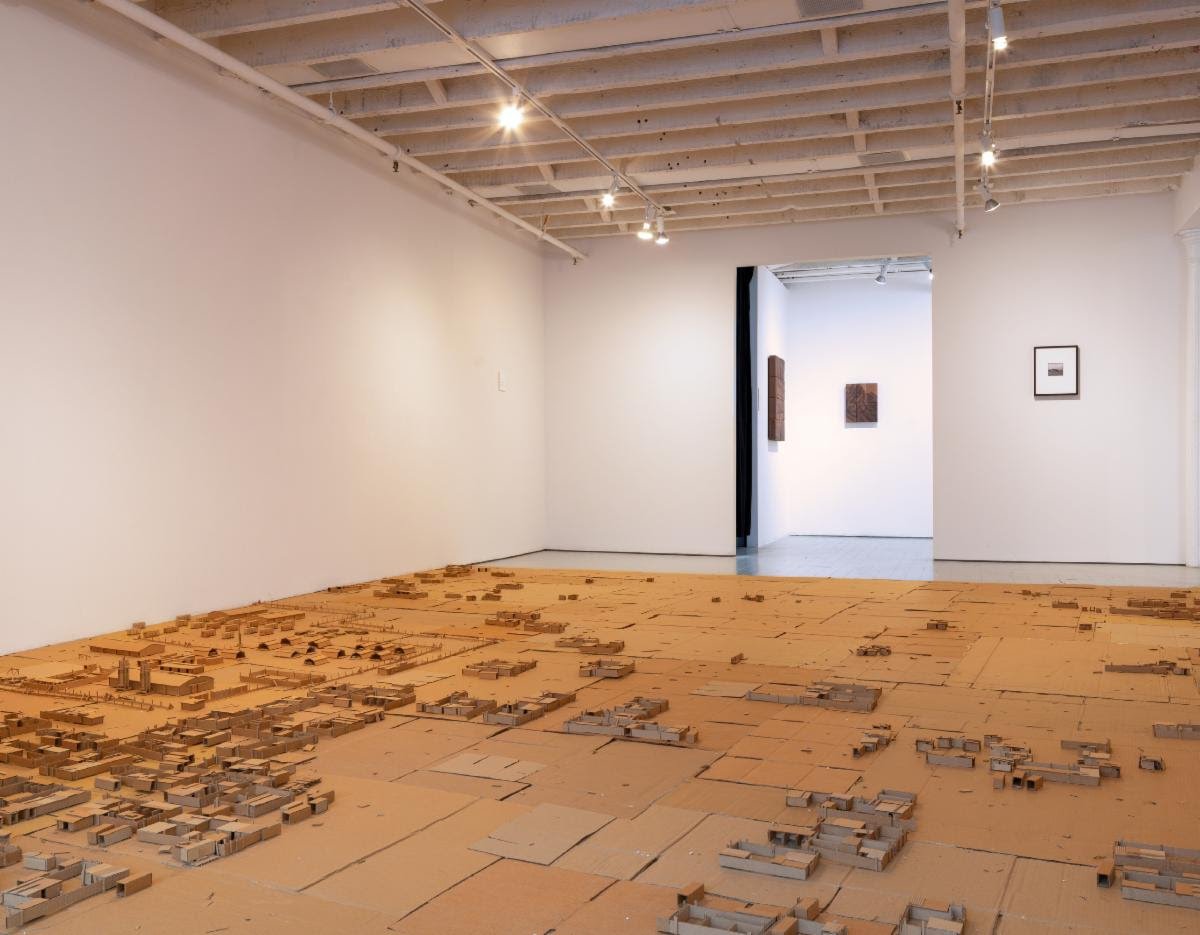
Michael Ashkin, where hiding places are many, escape only one, 2009-2025, Courtesy of the artist. Rich Land, Poor Land, carriage trade, 2025, Photo: Nicholas Knight.
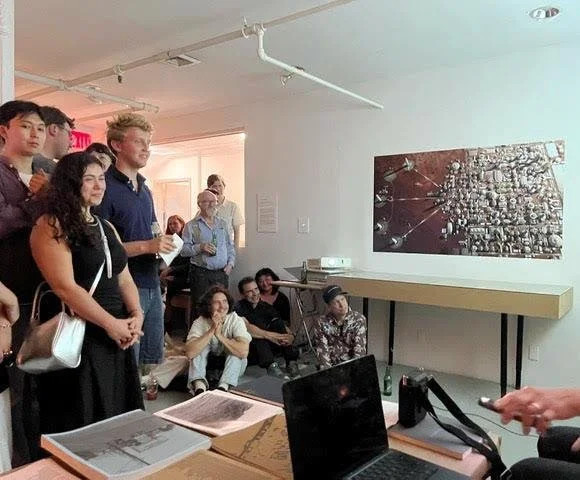
Film screening and reading by Michael Ashkin, Rich Land Poor Land, carriage trade, 2025
Producing catalogs, brochures, and online content for each show while offering curator-led exhibition tours in the gallery as well as screenings and gallery talks, Carriage Trade’s exhibition projects help expand the audience and understanding of artists’ work, while increasing its visibility in the form of regular press coverage in The New York Times, The Brooklyn Rail, Frieze, Hyperallergic, Channel Thirteen, Artforum, Screen Slate, Time Magazine, Bomb Magazine, The Manhattan Art Review, New York Magazine, artnet, The New Yorker, The Huffington Post, among many other publications.
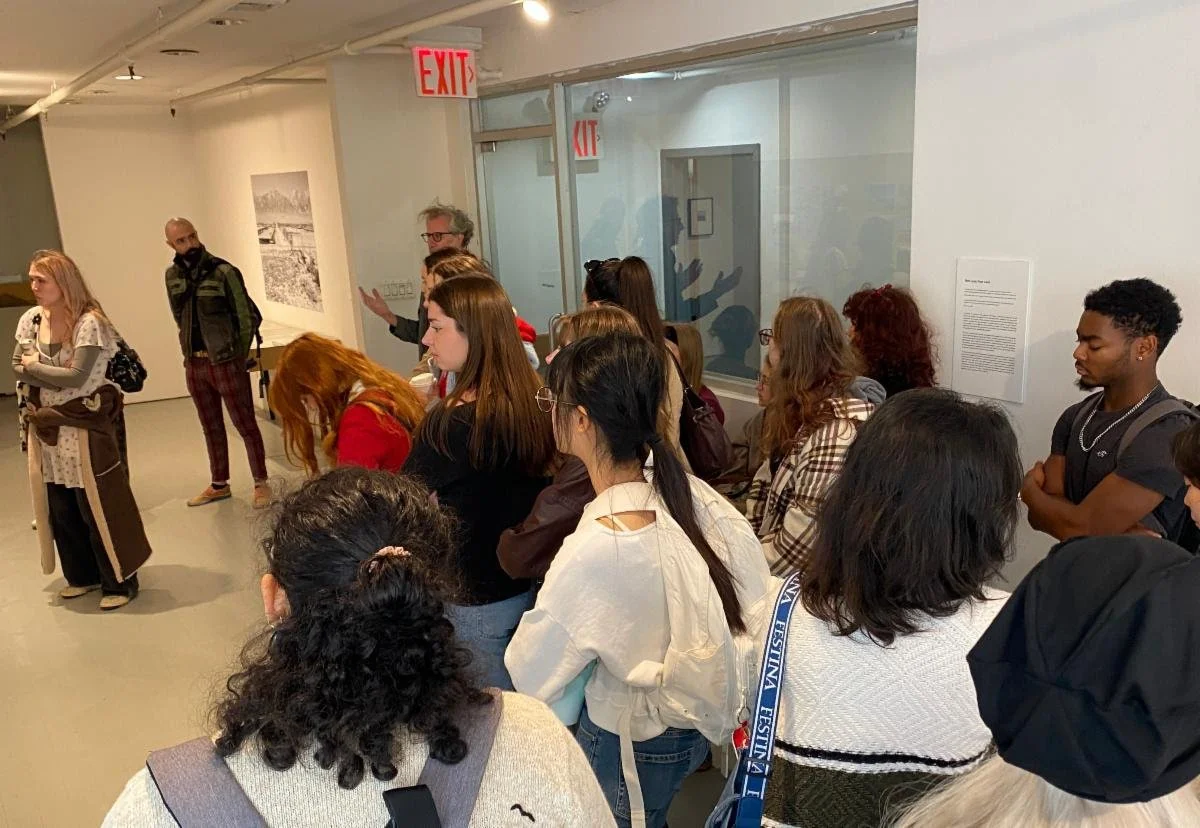
Director / Curator Peter Scott conducting a tour of Rich Land, Poor Land for students from Rutgers University, 2025
Carriage Trade has produced over 60 exhibitions, 11 Social Photography shows, 5 book fairs, and many talks and screenings over the last 16 years, playing a vital role in New York's downtown cultural community. Your tax deductible donation will help us continue our longstanding mission of producing aesthetically adventurous and socially engaged programming, while fostering and sustaining a community within a social and political moment that’s increasingly hostile to critical inquiry and debate.
Carriage Trade is a 501c3 non-profit organization.
All contributions are tax-deductible to the fullest extent allowable under the law.
Carriage Trade would like to express its appreciation to all who follow and support our programming and wish everyone the best for the coming holidays. We'd also like to thank gallery assistants Laura Li, Ana León, and Daniel Cooper for their invaluable efforts on the exhibitions and the day-to-day operations of the gallery.