
Rich Land, Poor Land
Reopens: September 12, 2025, runs through October 12, 2025
September 12: Catalog Launch / Exhibition Reopening: 6:00-8:30 pm
Film Screening / Reading by Michael Ashkin: 7:30pm
Ansel Adams
Michael Ashkin
Ilana Harris-Babou
Center for Land Use Interpretation
Jane Crawford and Robert Fiore
Dorothea Lange
Arthur Rothstein
Nancy Holt and Robert Smithson
Yiyao Tang
The Yes Men
carriage trade
277 Grand Street, 2 Fl
New York, NY 10002
718-483-0815
Thursday - Sunday, 1-6 PM
The story goes that an old Nebraska farmer was sitting on his porch during a dust storm. Asked what he was watching so intently, he replied: “I’m counting the Kansas farms as they go by.”
Stuart Chase, Rich Land, Poor Land, a Study of Waste in the Natural Resources of America, 1936
Sometimes you get these late-civilization vibes [that the] apocalypse could come along at any moment. Here at Tesla, we have the best in apocalypse technology.
Elon Musk, 2023
The forces of destruction are suddenly everywhere. Looming but long held at bay through jury rigging and sleights of hand that appeared to sustain an "our way of life" long envied by the world, media coverage of growing societal tensions suggested the country's problem was little more than a divided majority in need of repair. Claiming these tensions were limited to cultural differences within an otherwise functioning democracy, the gradual dissolution of our way of life for many of those on the lower end of the economic divide received little attention.
The "land of opportunity" narrative, ever reliant on the latent power of the expansionist ethos of Manifest Destiny, projects an image of a society where there is plenty for all. The skies here are always bluer, the mountains higher. America's exceptionalism proved itself through scale. Pushing westward with the confidence that all in sight was there for the taking, the land was synonymous with pillage for many, with glorious depictions by artists retroactively assigning a kind of spiritual justification for the unlimited natural resources magically transformed into material wealth.
Focusing on the politics of landscape and land use, this exhibition takes as its reference point Stuart Chases' 1936 land use study Rich Land, Poor Land, a Study of Waste in the Natural Resources of America. Written not long after the environmental devastation of the Dust Bowl, Rich Land, Poor Land argues for a respect for natural processes and resources, which are often ignored at society's peril. Updating these concerns to our contemporary moment, the exhibition will explore connections between landscape as symbolic of bounty for the many, contrasted with the often brutal expropriation of its resources and occupants on behalf of the few.
Carriage Trade would like to extend a special thanks to Rebecca Cleman, Karl McCool, and Jooyoung Friedman-Buchanan at Electronic Arts Intermix, Daniel Cooper for his research for this project, as well as all the artists for their loans of artwork for the exhibition. We’d also like thank to the Cafe Royal Cultural Foundation, Lower Manhattan Cultural Council (LMCC), New York State Council on the Arts (NYSCA), Lawrence B. Benenson, The Parc Foundation, Josephine Simon, and Mr. Jacques Louis Vidal for their vital support of our projects. Thanks also to gallery assistants Jackson Cane, Ryan Johnson, Ana León, Laura Li for their invaluable efforts on this exhibition and the day-to-day operations of the gallery.
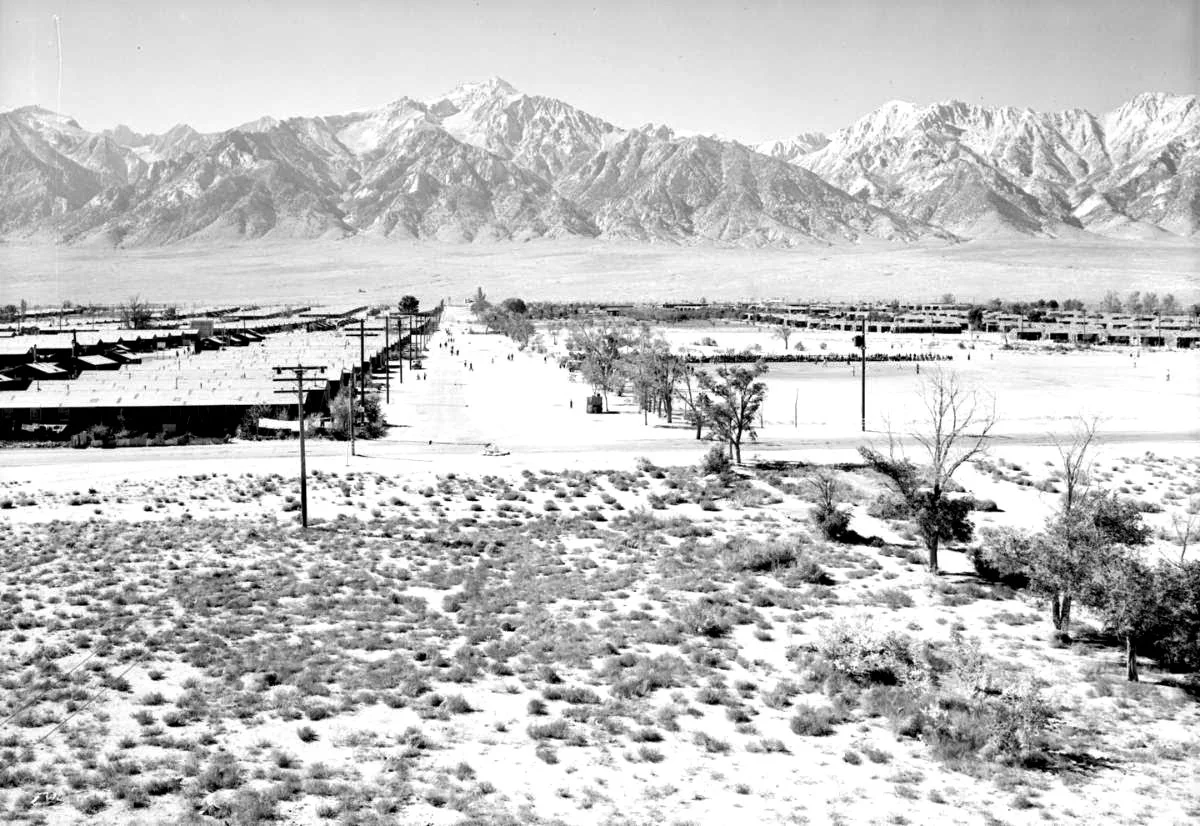
Photo: Ansel Adams, Manzanar Relocation Center from Tower, 1943
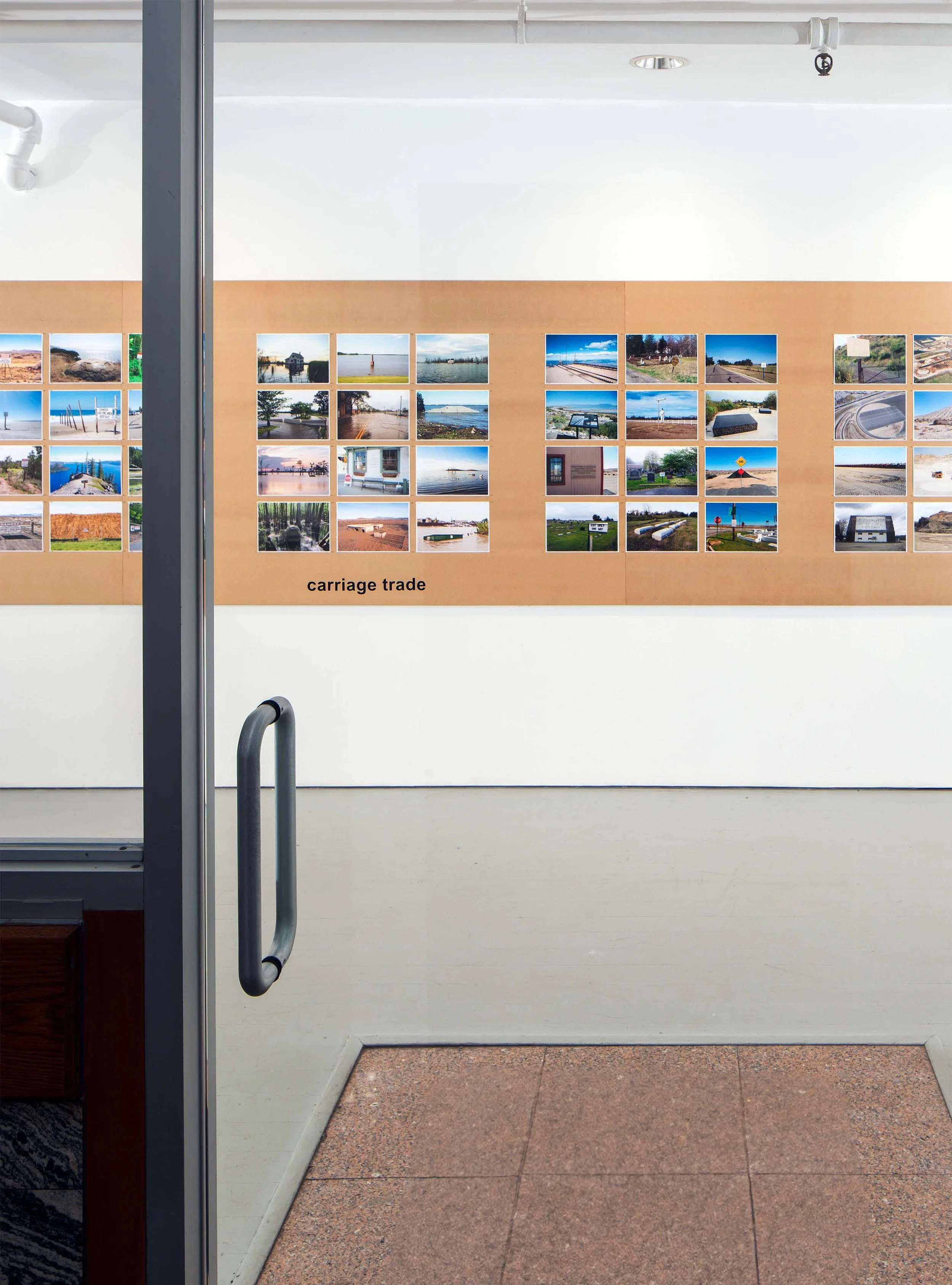
Installation View, Rich Land, Poor Land, Carriage Trade, Photo: Nicholas Knight.
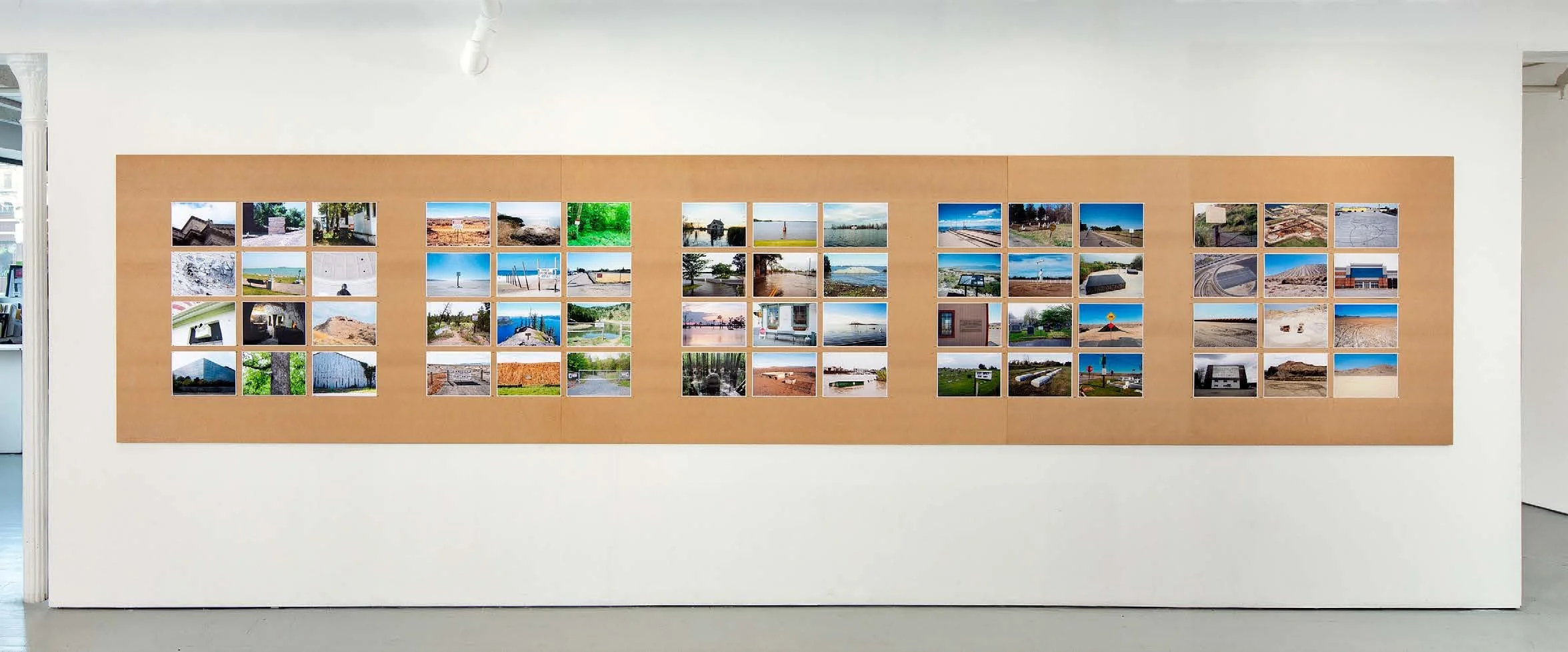
The Center for Land Use Interpretation, Left to right: photo archive (Surveillance, Danger, Floods, The End, Traces), 60 inkjet prints, 8" x 10 " each, Courtesy of The Center for Land Use Interpretation, Photo: Nicholas Knight.
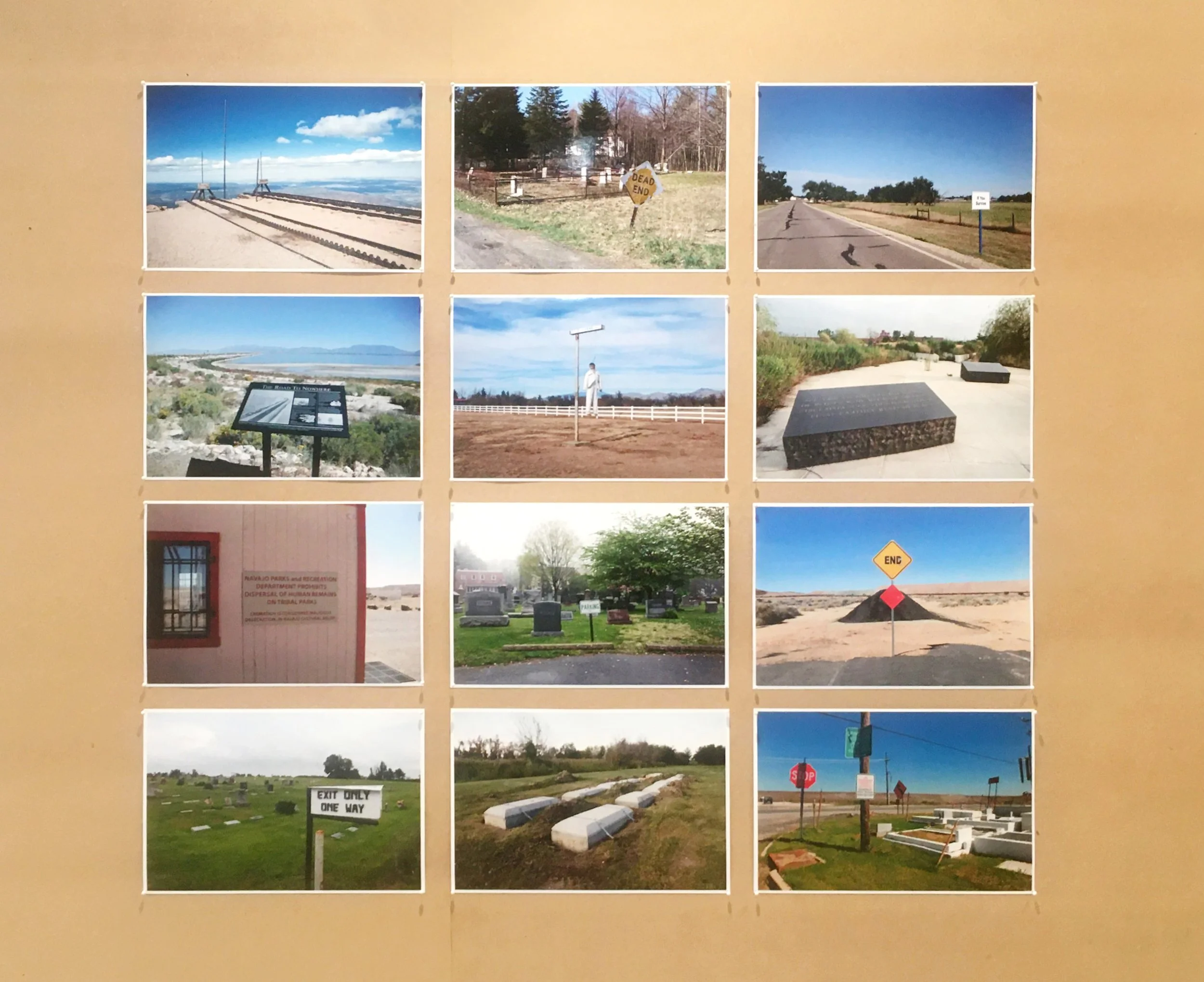
The Center for Land Use Interpretation, photo archive (The End). ink jet prints, Courtesy of The Center for Land Use Interpretation, Photo: Nicholas Knight.
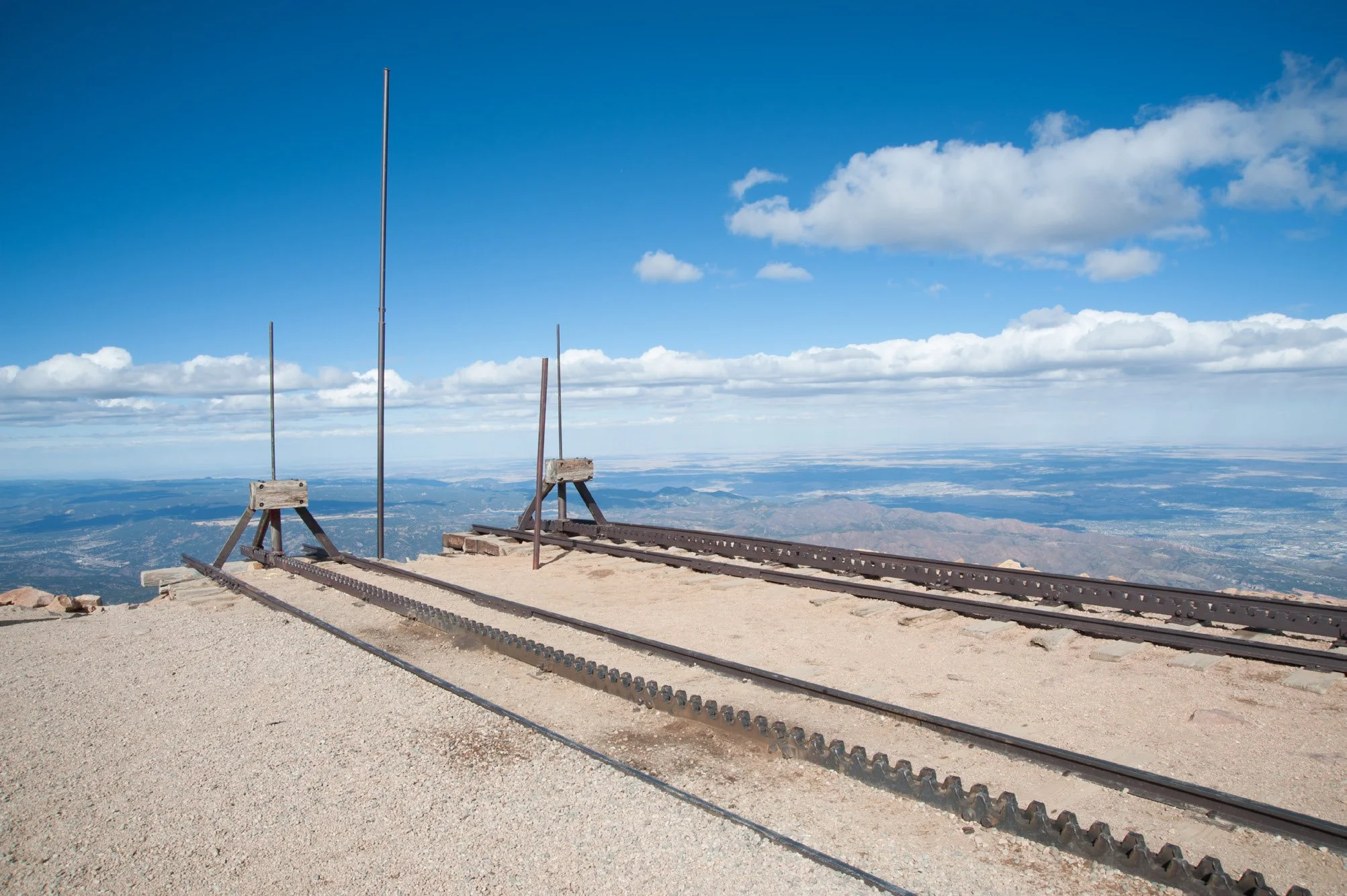
Center for Land Use Interpretation, photo archive (The End), Courtesy of The Center for Land Use Interpretation.
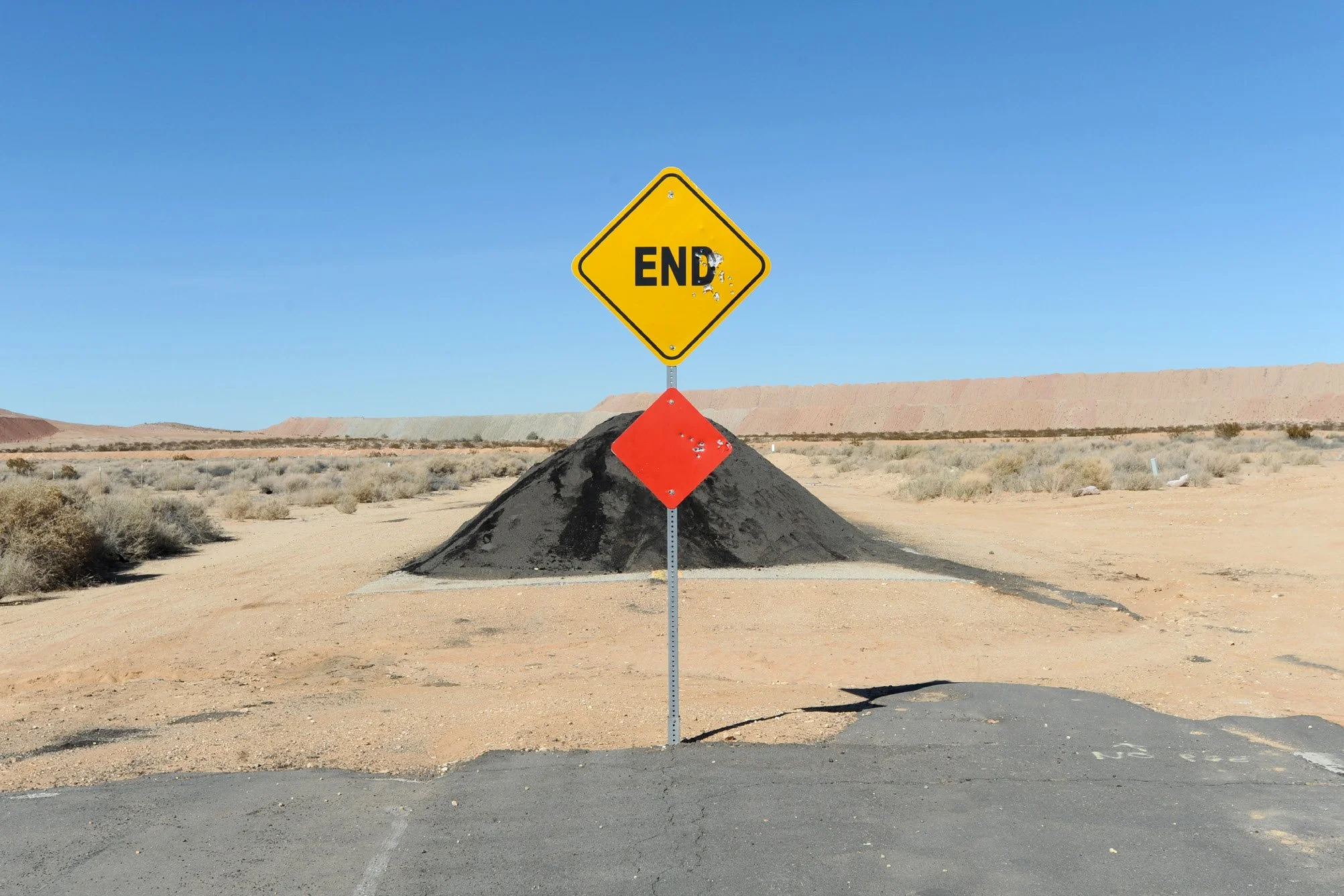
Center for Land Use Interpretation, photo archive (The End), Courtesy of The Center for Land Use Interpretation.
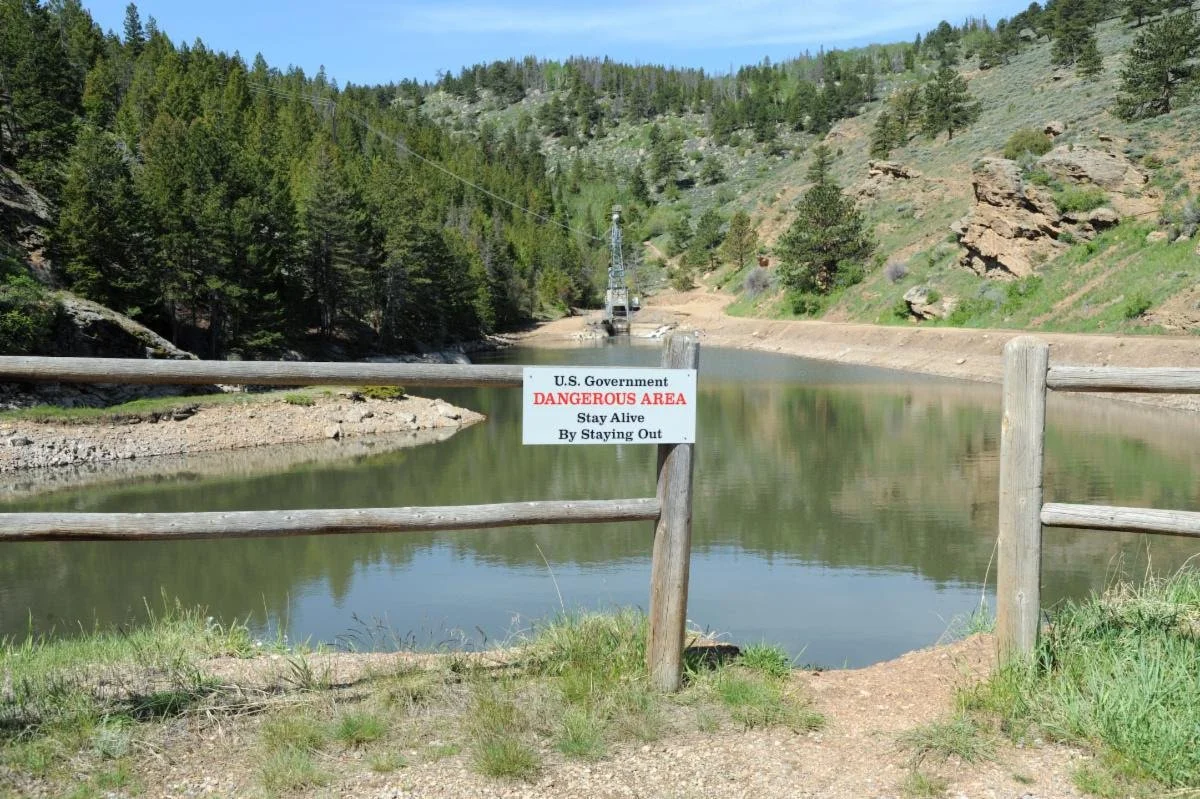
Center for Land Use Interpretation, photo archive (Danger), Courtesy of The Center for Land Use Interpretation.
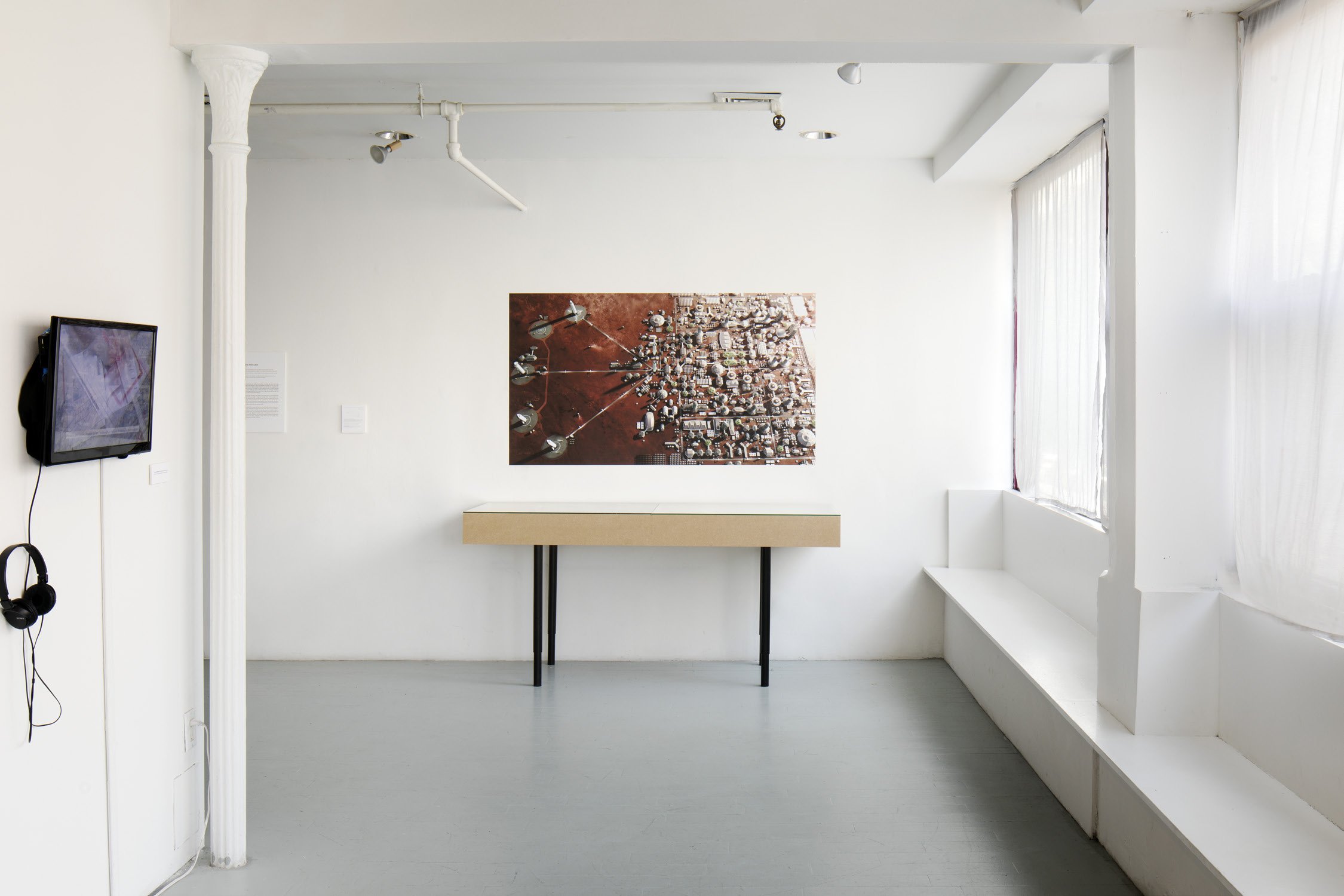
Installation View, Rich Land, Poor Land, Carriage Trade, Photo: Nicholas Knight
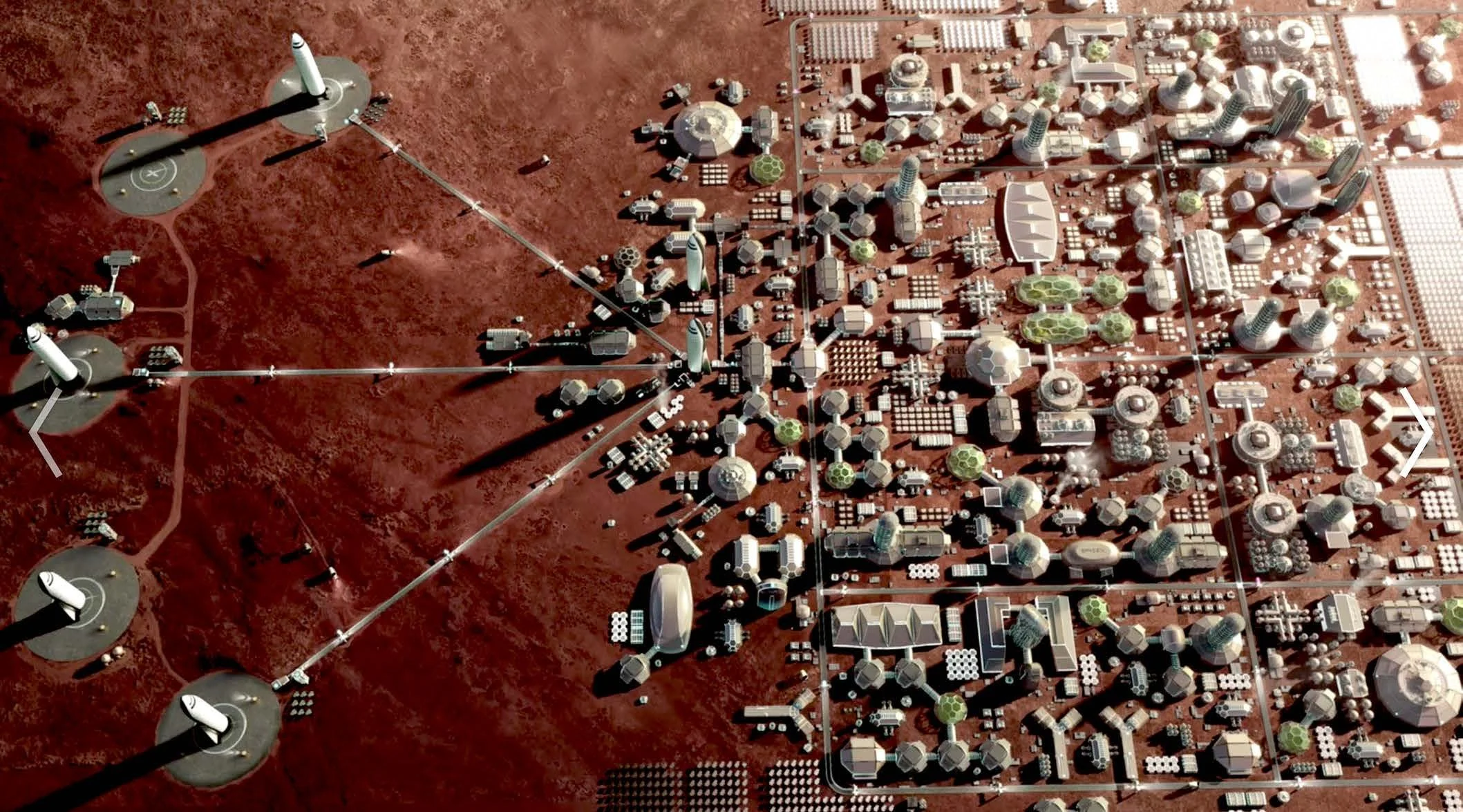
Archival Material (SpaceX, Mars City), 2017, Matte vinyl print, 36 3/8” x 64 1/2”.
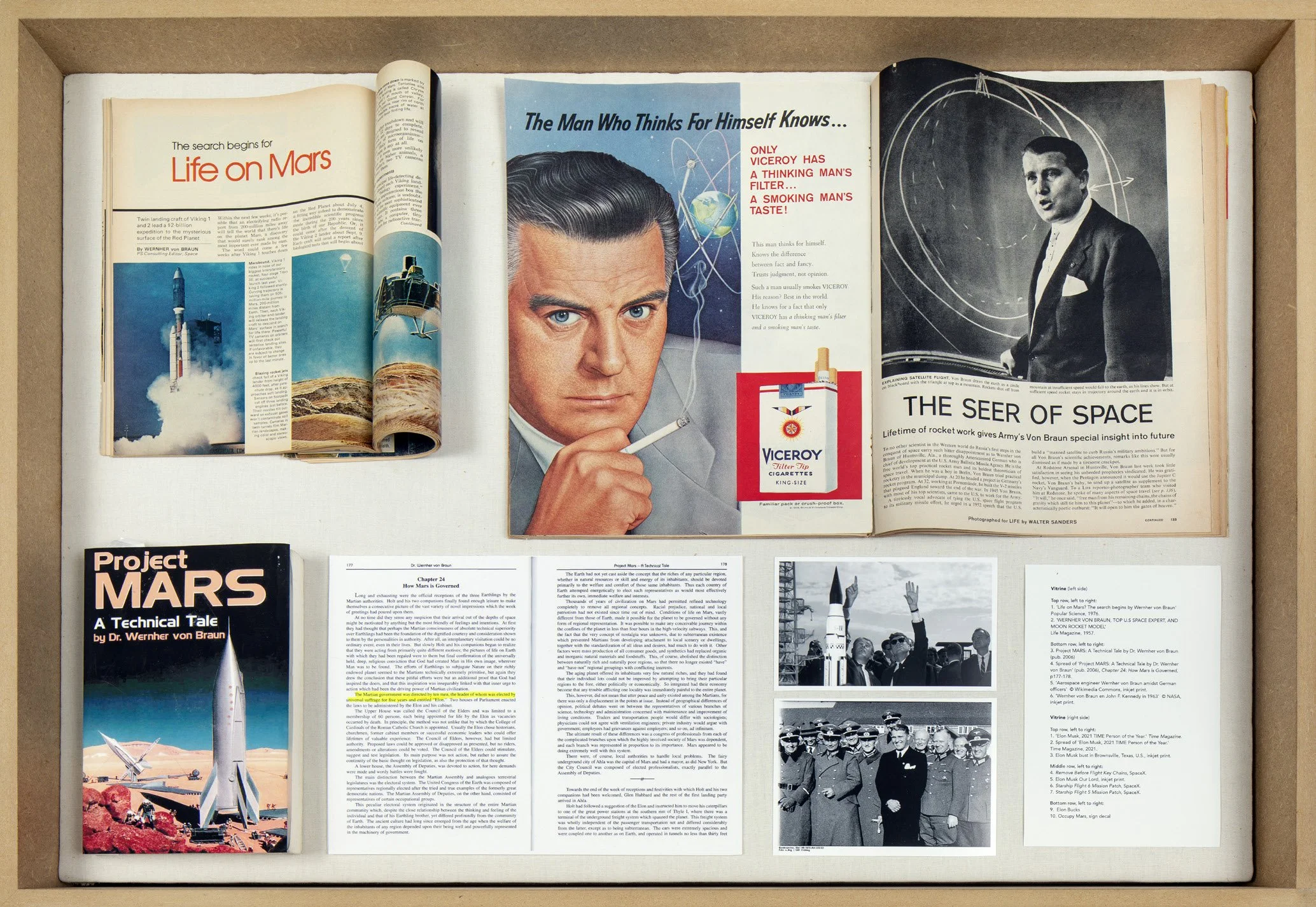
Installation Detail, Archival Material (Wernher von Braun), Rich Land, Poor Land, Carriage Trade,
Photo: Nicholas Knight.
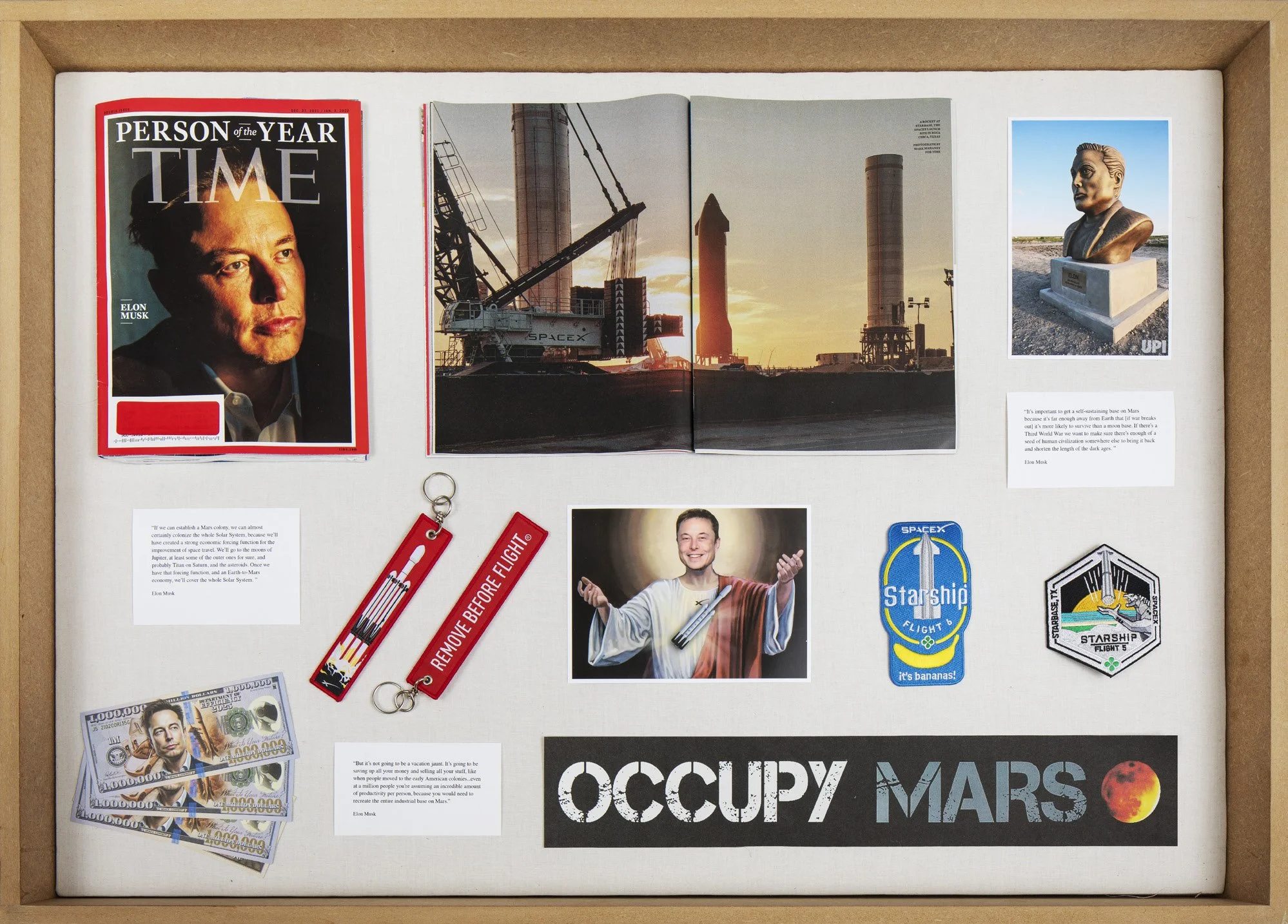
Installation Detail, Archival Material (Elon Musk), Rich Land, Poor Land, Carriage Trade, Photo: Nicholas Knight.
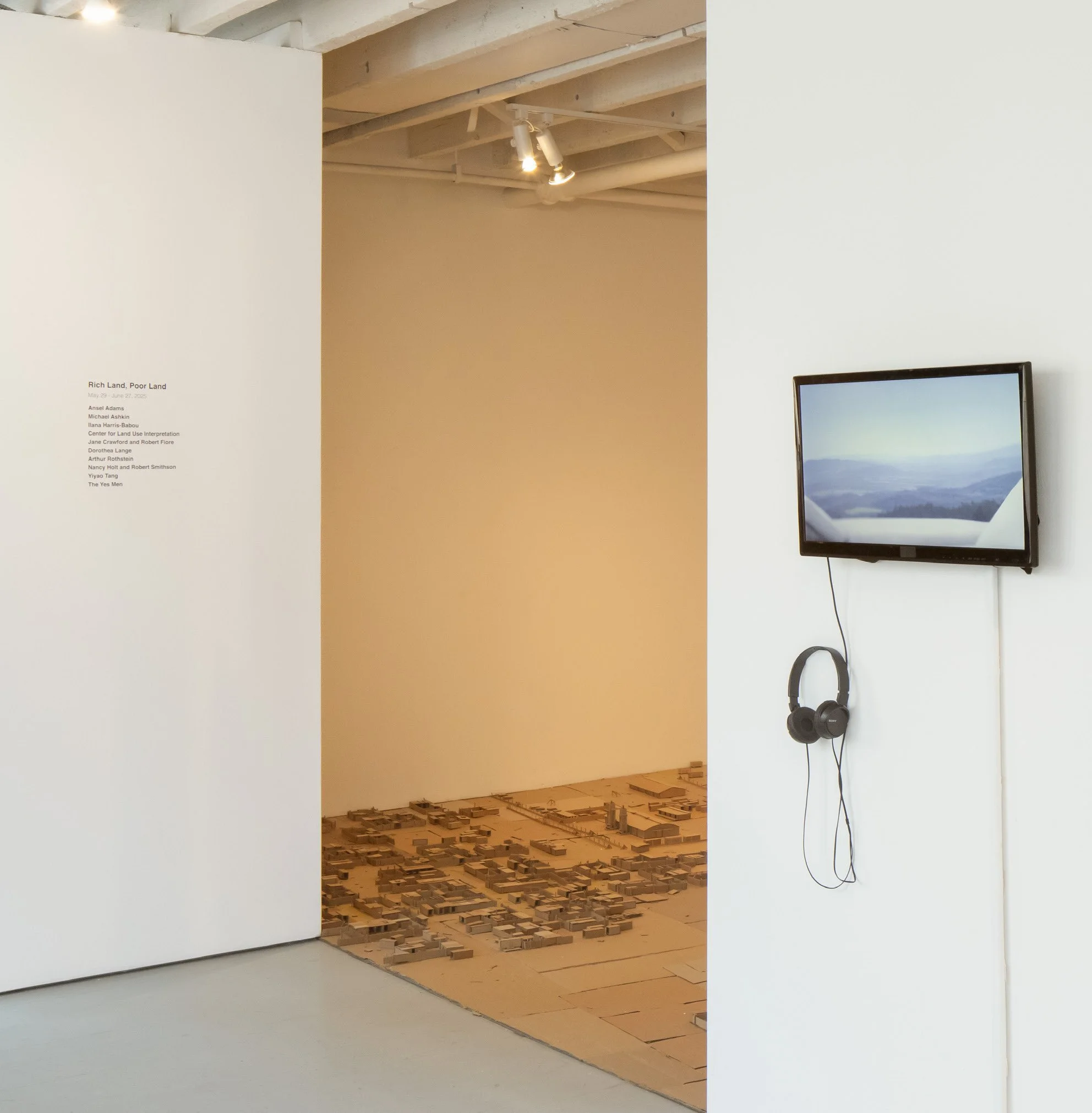
Installation View, Rich Land, Poor Land, Carriage Trade, Photo: Nicholas Knight.
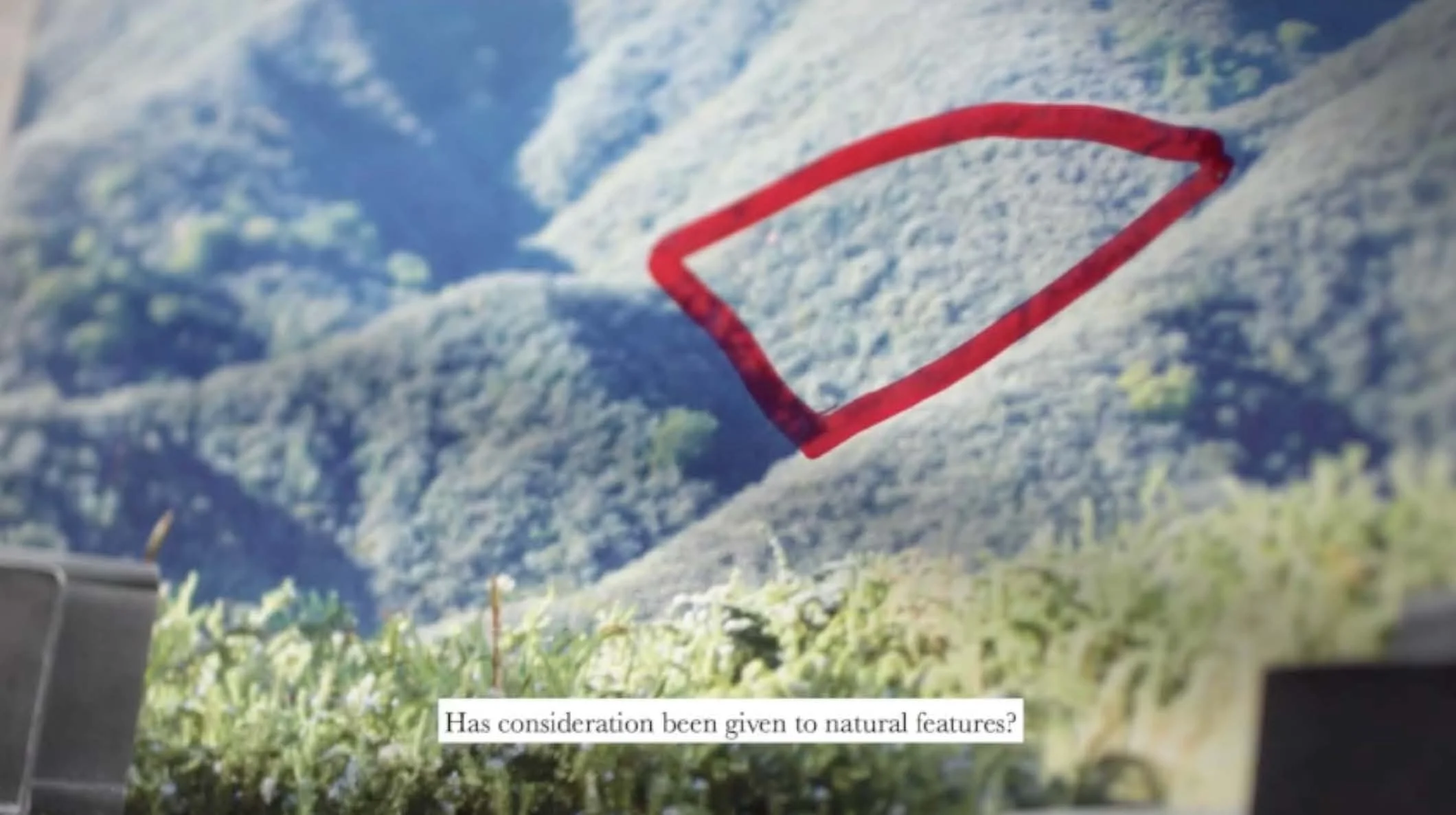
Ilana Harris-Babou, Red Sourcebook, 2018, video still. Courtesy of the artist & Electronic Arts Intermix (EAI).

Michael Ashkin, where hiding places are many, escape only one, 2009-2025, recycled cardboard with glue, dimensions variable. Courtesy of the artist. Rich Land, Poor Land, Carriage Trade, Photo: Nicholas Knight.
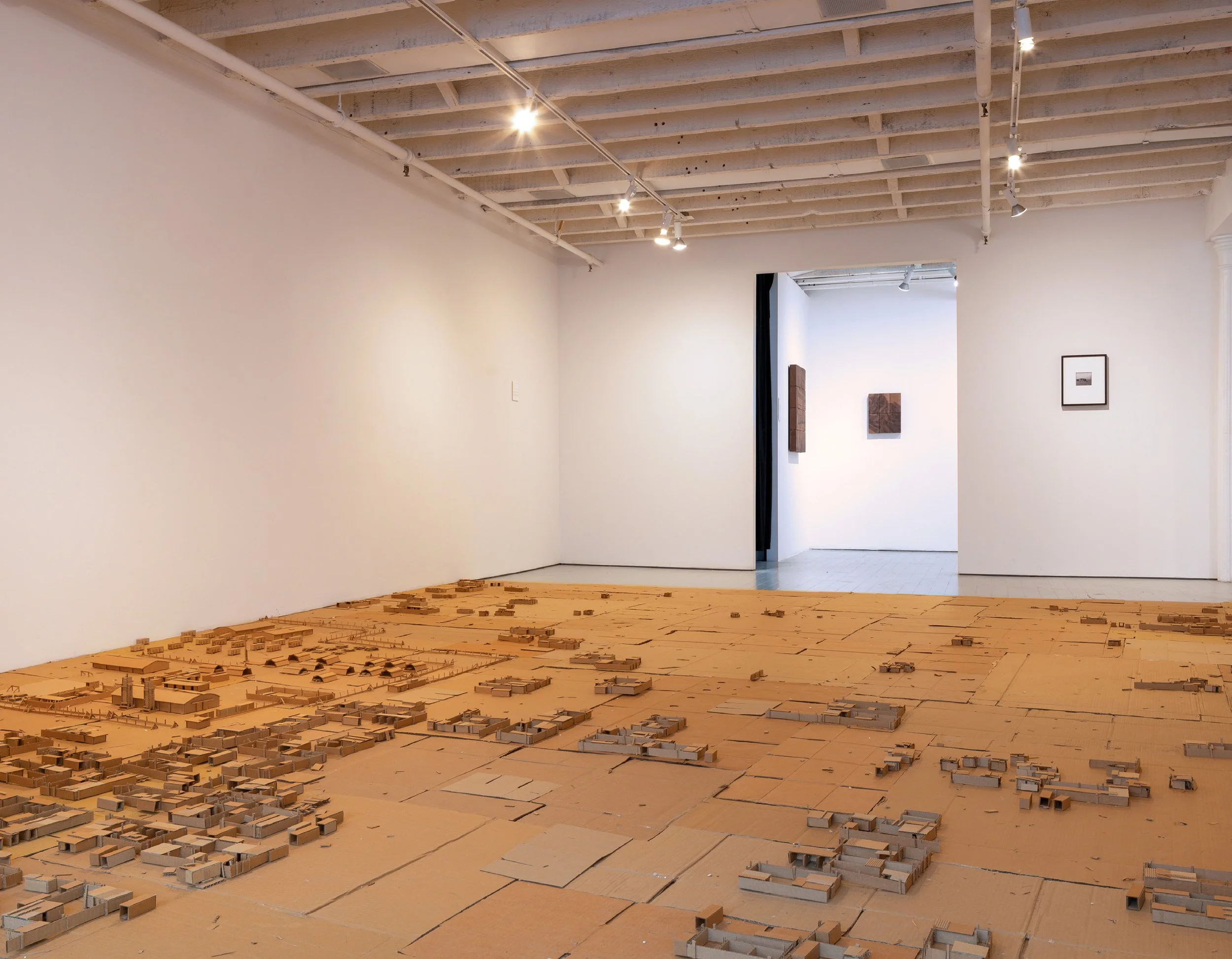
Michael Ashkin, where hiding places are many, escape only one, 2009-2025, recycled cardboard with glue, dimensions variable. Courtesy of the artist. Rich Land, Poor Land, Carriage Trade, Photo: Nicholas Knight.
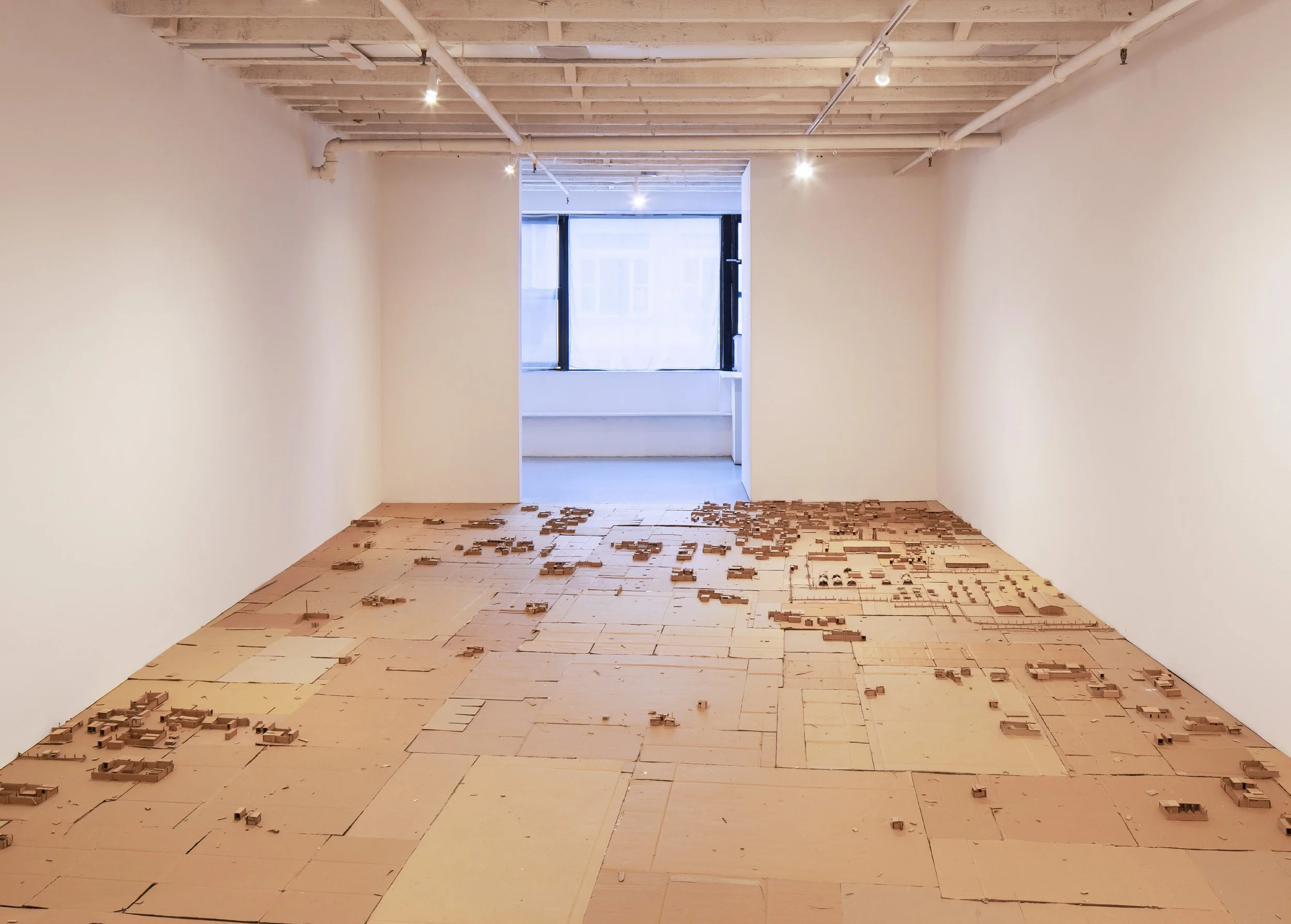
Michael Ashkin, where hiding places are many, escape only one, 2009-2025, recycled cardboard with glue, dimensions variable. Courtesy of the artist. Rich Land, Poor Land, Carriage Trade, Photo: Nicholas Knight.
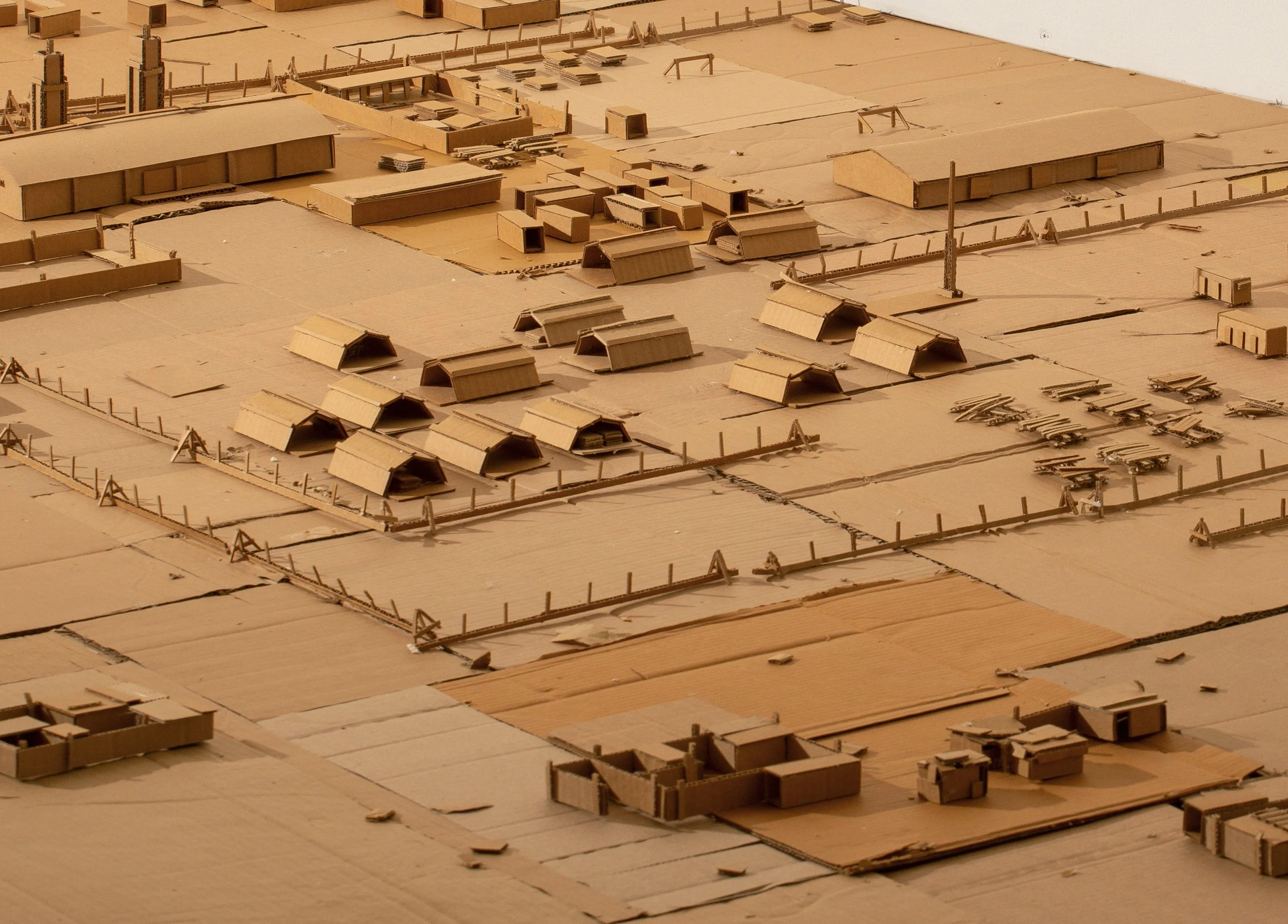
Michael Ashkin, where hiding places are many, escape only one, 2009-2025, recycled cardboard with glue, dimensions variable. Courtesy of the artist. Rich Land, Poor Land, Carriage Trade, Photo: Nicholas Knight.
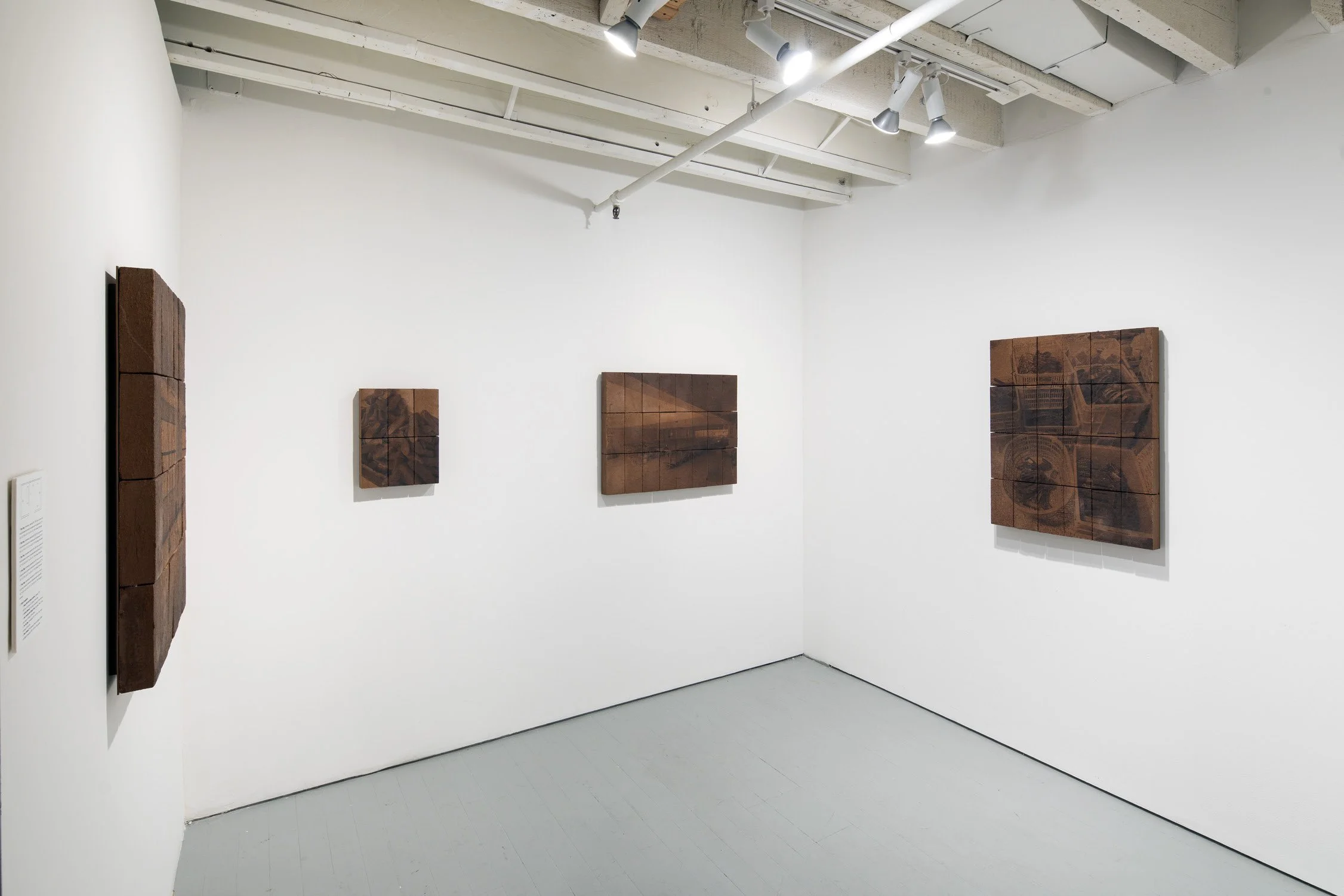
Installation View, Rich Land, Poor Land, Carriage Trade, Photo: Nicholas Knight.
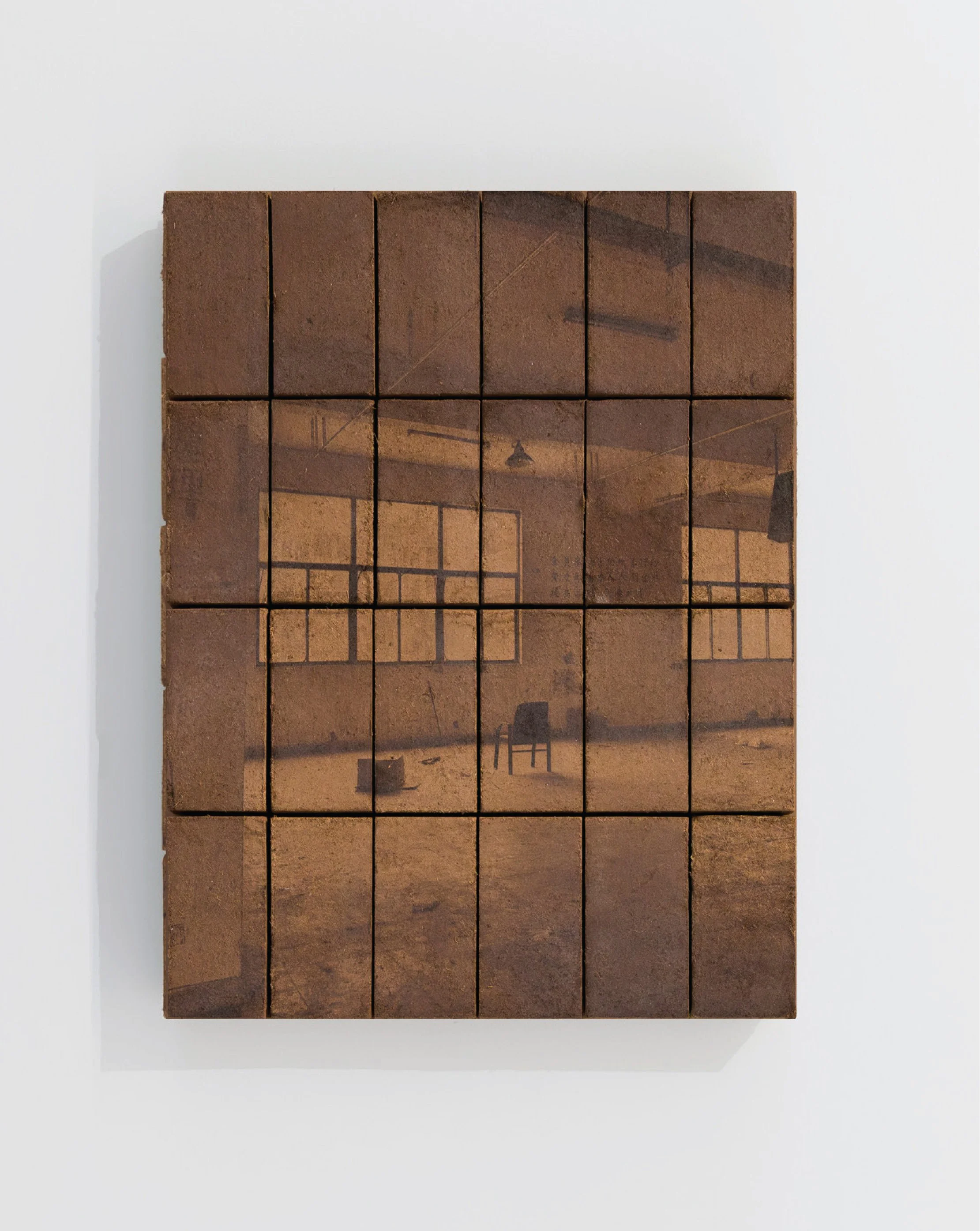
Yiyao Tang, compressing, expanding #11, 2024, Ink on coconut coir bricks (mounted on aluminum composite panel and plywood), 32.7” x 24.6” x 2.8” (83 x 62.5 x 7 cm.) Ed. of 3, 1 AP. Courtesy of the artist. Photo: Nicholas Knight.
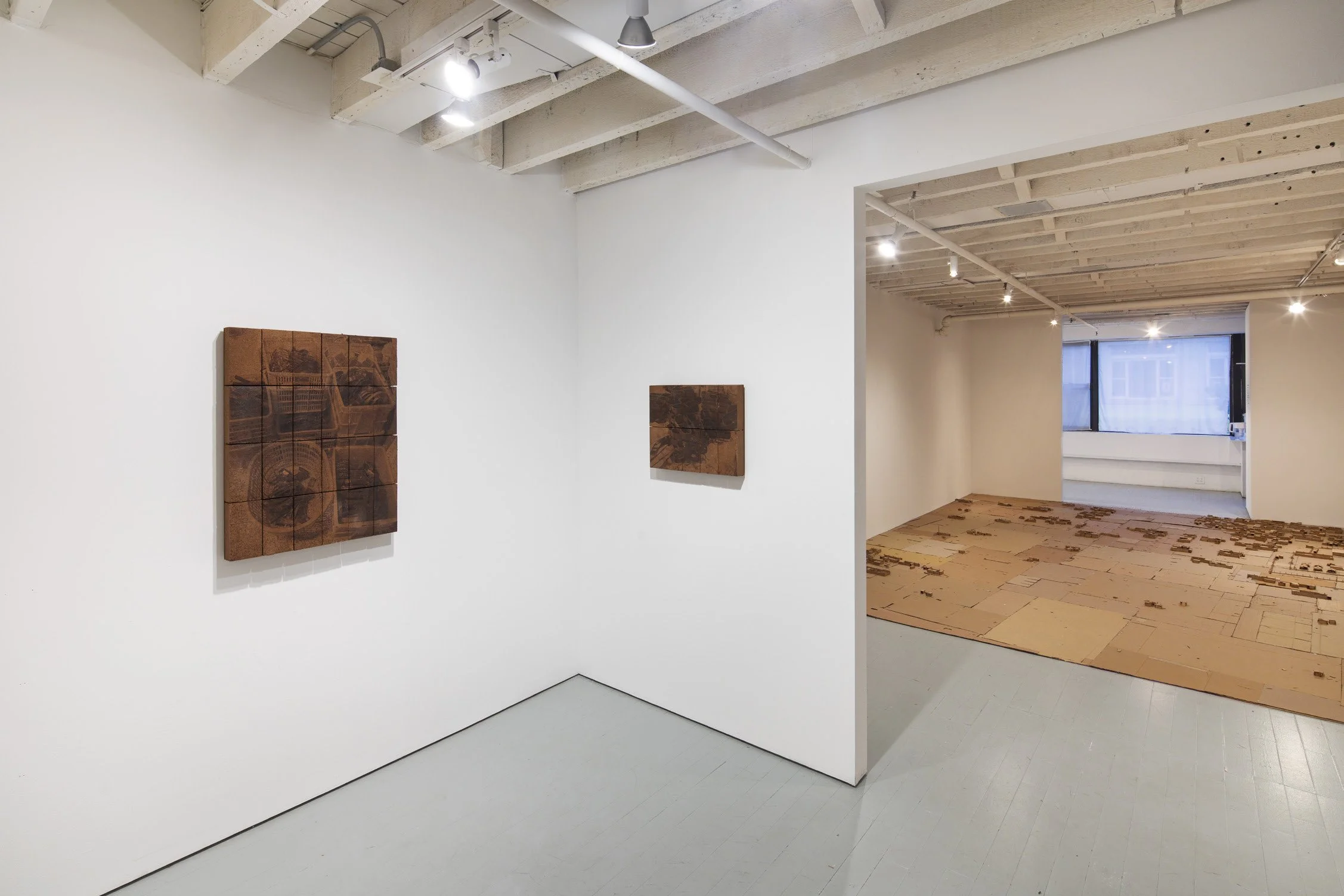
Installation View, Rich Land, Poor Land, Carriage Trade, Photo: Nicholas Knight.
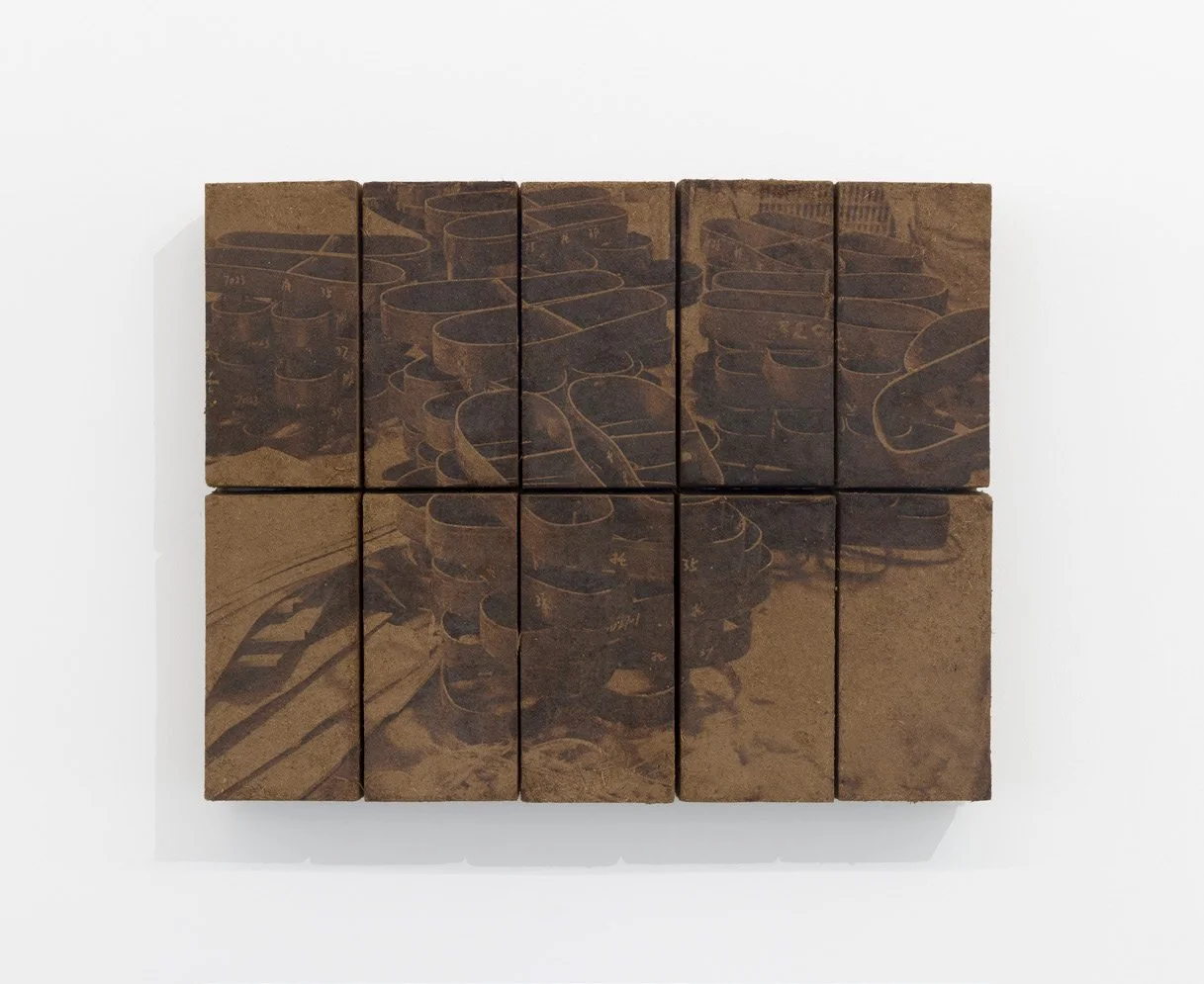
Yiyao Tang, compressing, expanding #17, 2024, Ink on coconut coir bricks (mounted on aluminum composite panel and plywood), 16.3” x 20.4” x 2.8” (41.5 x 51.7 x 7 cm.) Ed. of 3, 1 AP. Courtesy of the artist. Photo: Nicholas Knight.
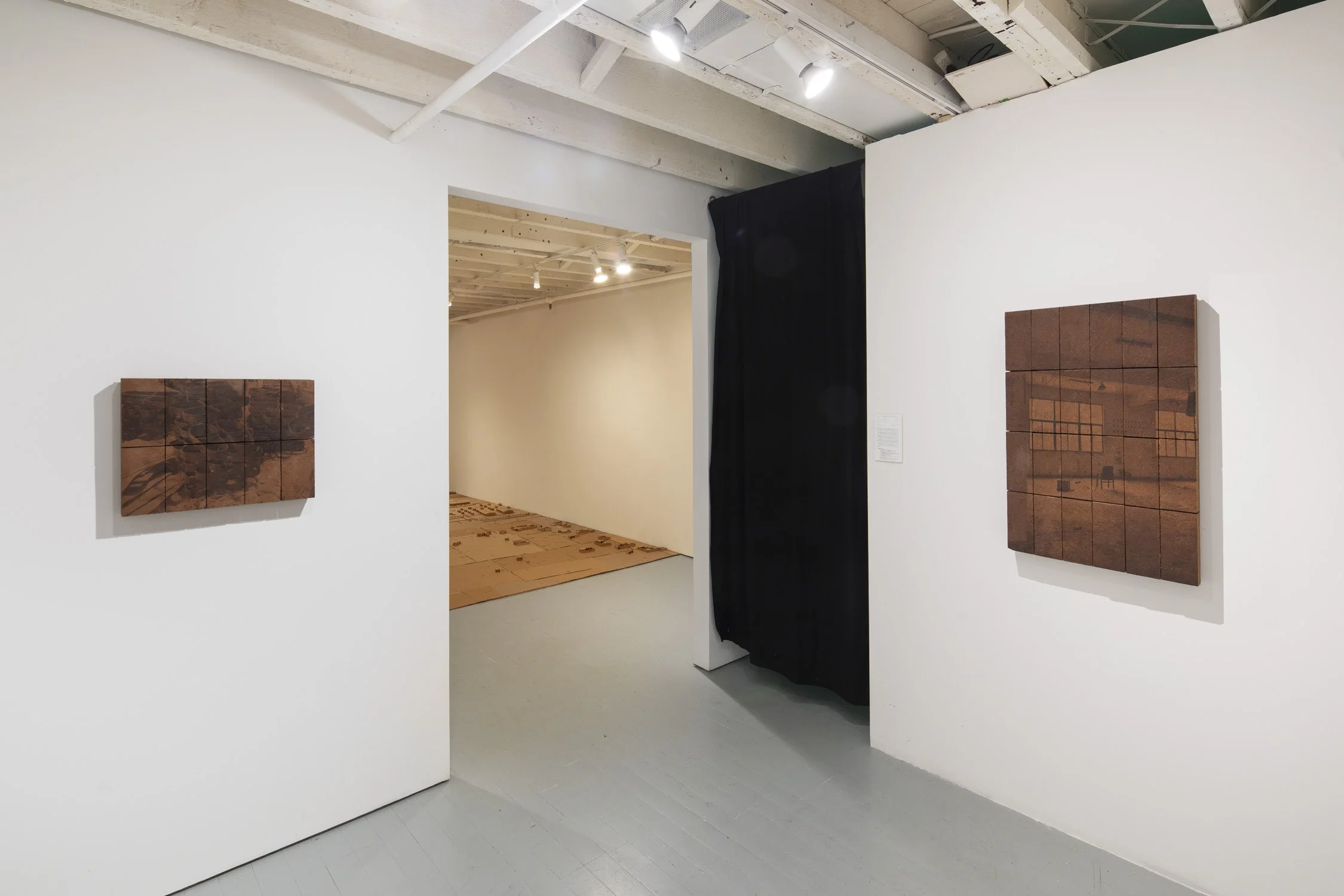
Installation View, Rich Land, Poor Land, Carriage Trade, Photo: Nicholas Knight.

Installation View, Nancy Holt and Robert Smithson, Swamp, 1971, 6:00 min, color, sound. Courtesy of the artists & Electronic Arts Intermix (EAI). Rich Land, Poor Land, Carriage Trade, Photo: Nicholas Knight.
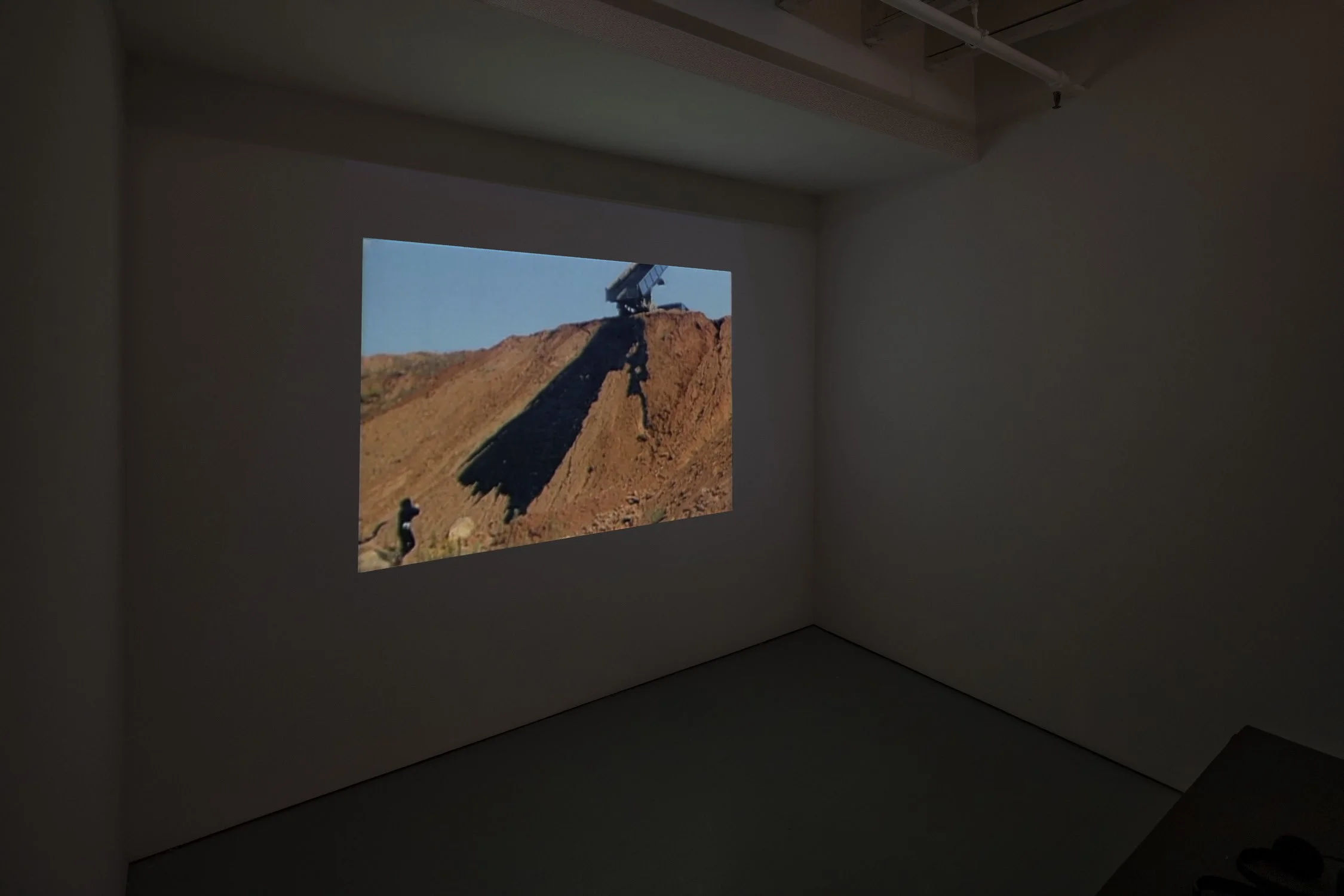
Installation View, Jane Crawford and Robert Fiore, Rundown, 1994, 12 min, color, sound. Courtesy of the artists & Electronic Arts Intermix (EAI). Rich Land, Poor Land, Carriage Trade, Photo: Nicholas Knight.
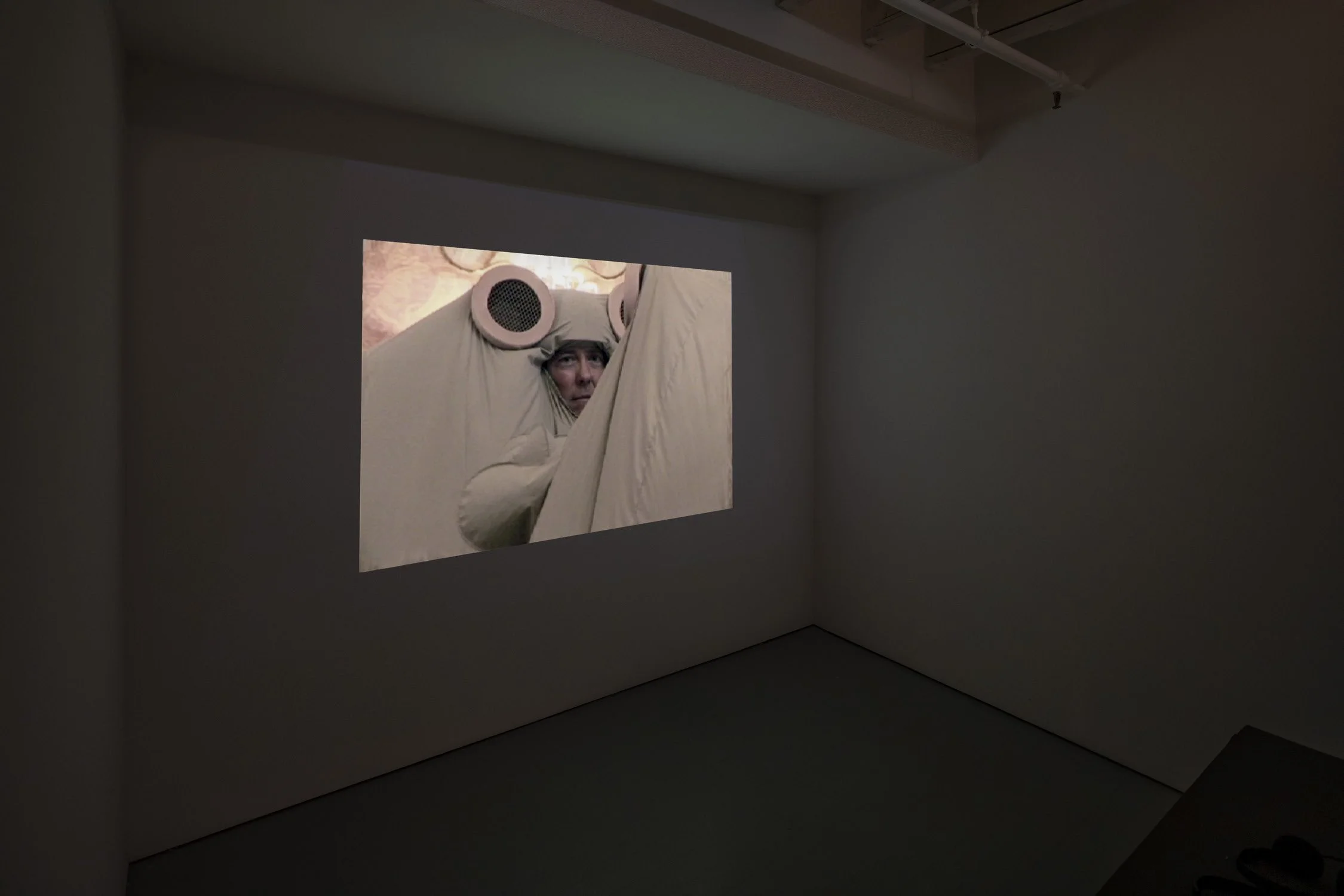
Installation View, The Yes Men, Survivaballs, 2015, 4:30 min, color, sound. Courtesy of the artists. Rich Land, Poor Land, Carriage Trade, Photo: Nicholas Knight.
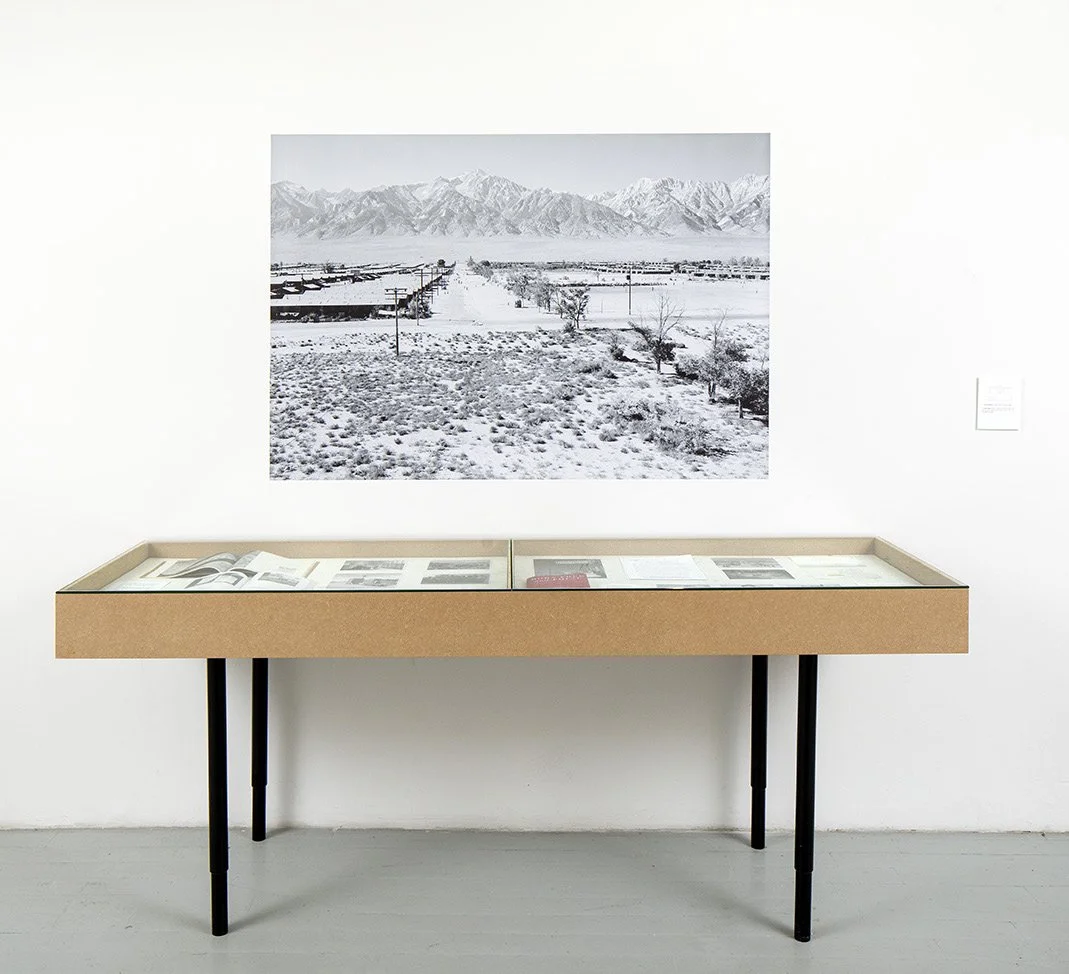
Installation View, Rich Land, Poor Land, Carriage Trade, Photo: Nicholas Knight.
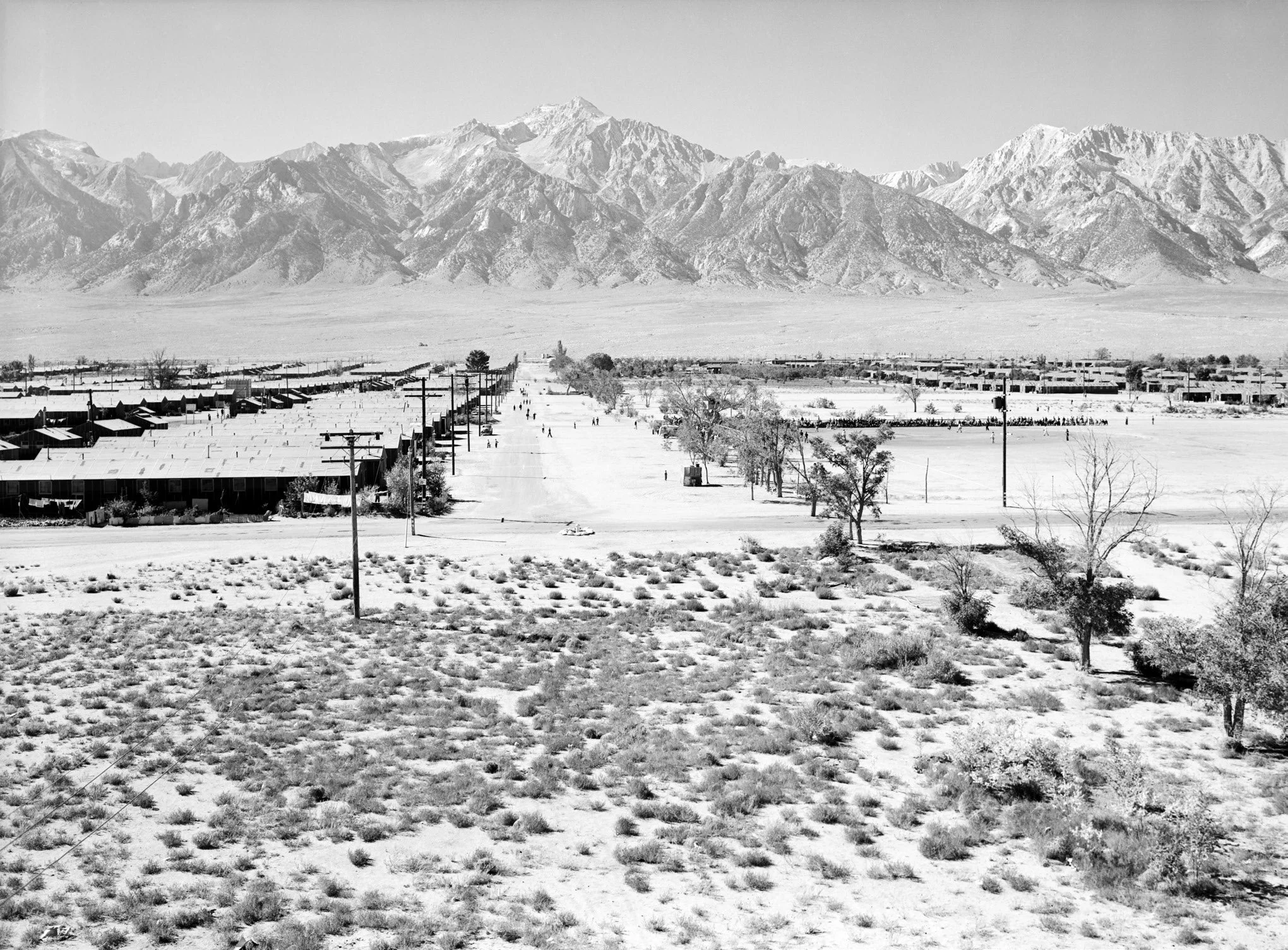
Ansel Adams, Manzanar Relocation Center from Guard Tower, 1943, Matte vinyl print,
Courtesy of The Library of Congress.
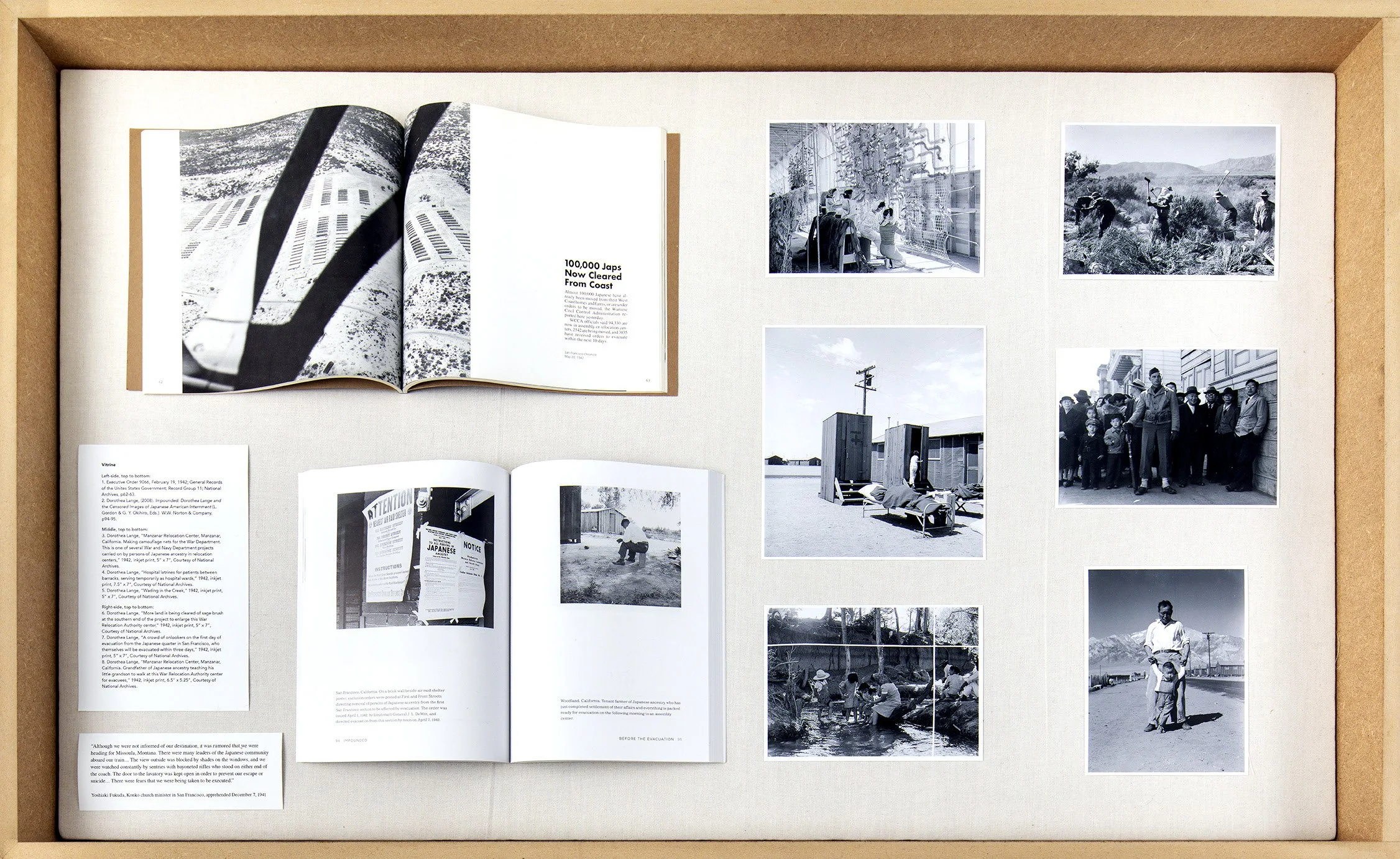
Installation Detail, Archival Material (Dorothea Lange), Rich Land, Poor Land, Carriage Trade,
Photo: Nicholas Knight.
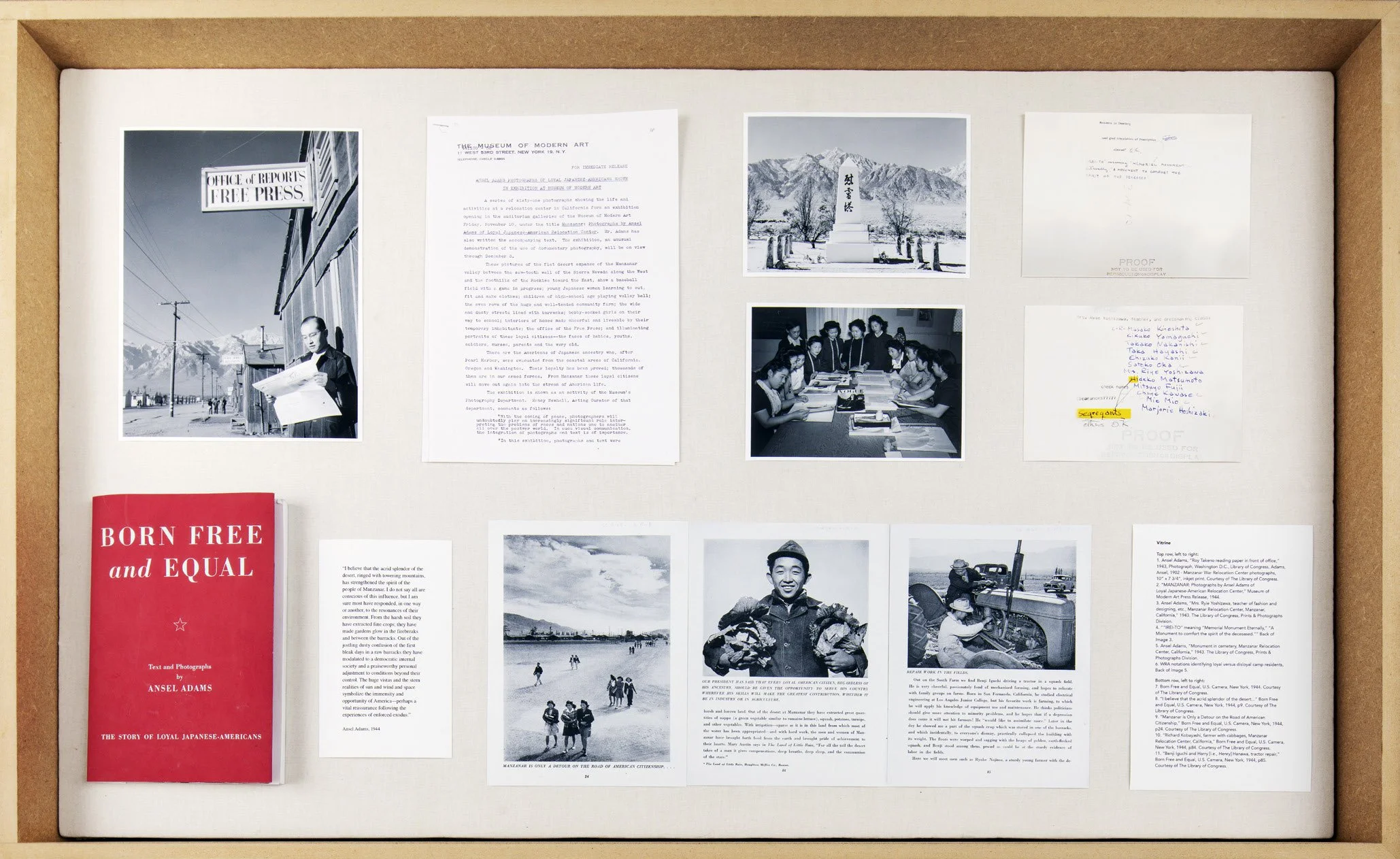
Installation Detail, Archival Material (Ansel Adams) Rich Land, Poor Land, Carriage Trade, Photo: Nicholas Knight.
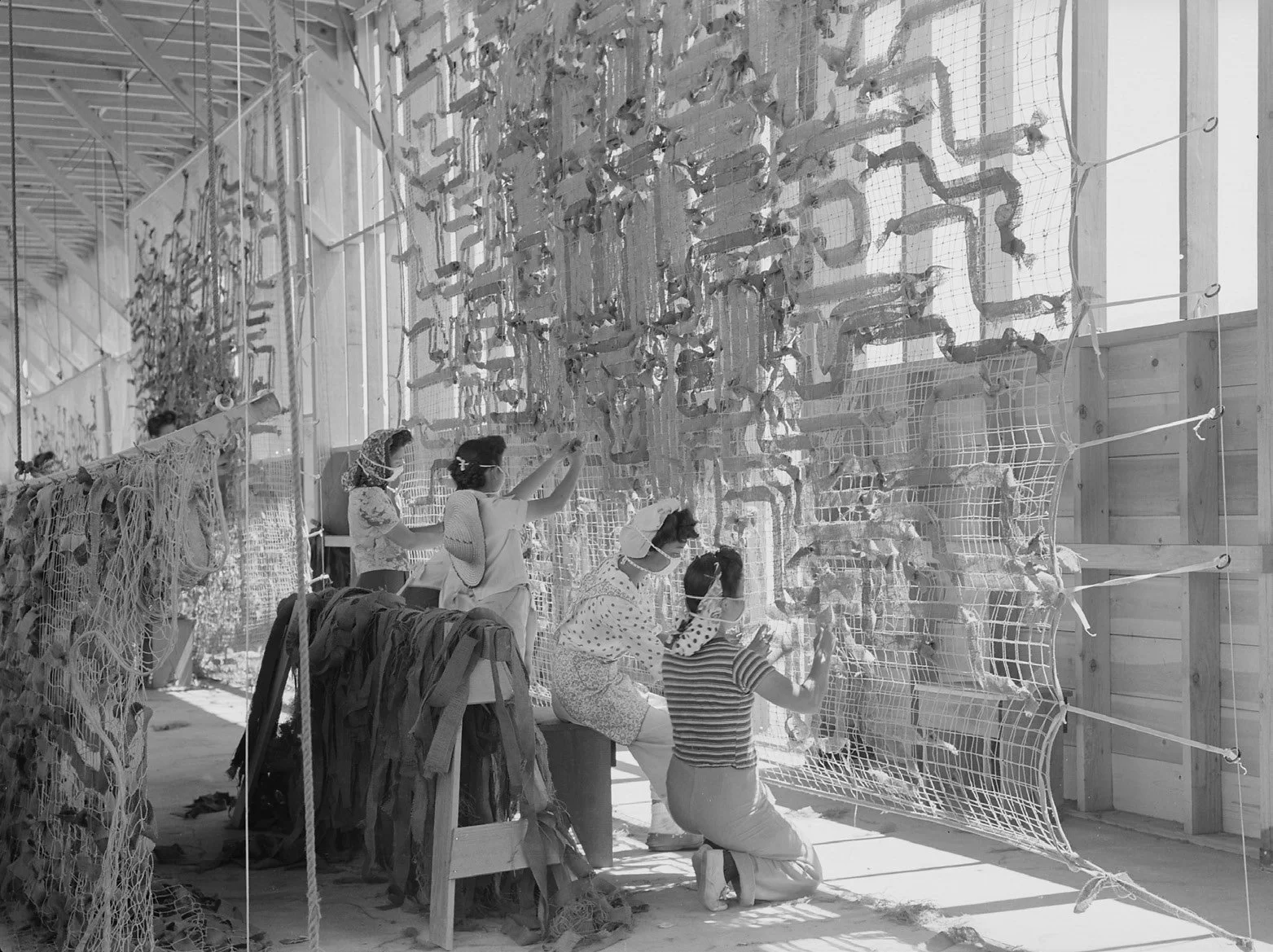
Dorothea Lange, “Manzanar Relocation Center, Manzanar, California. Making camouflage nets for the War Department. This is one of several War and Navy Department projects carried on by persons of Japanese ancestry in relocation centers,” 1942, inkjet print, 5” x 7”, Courtesy of National Archives.
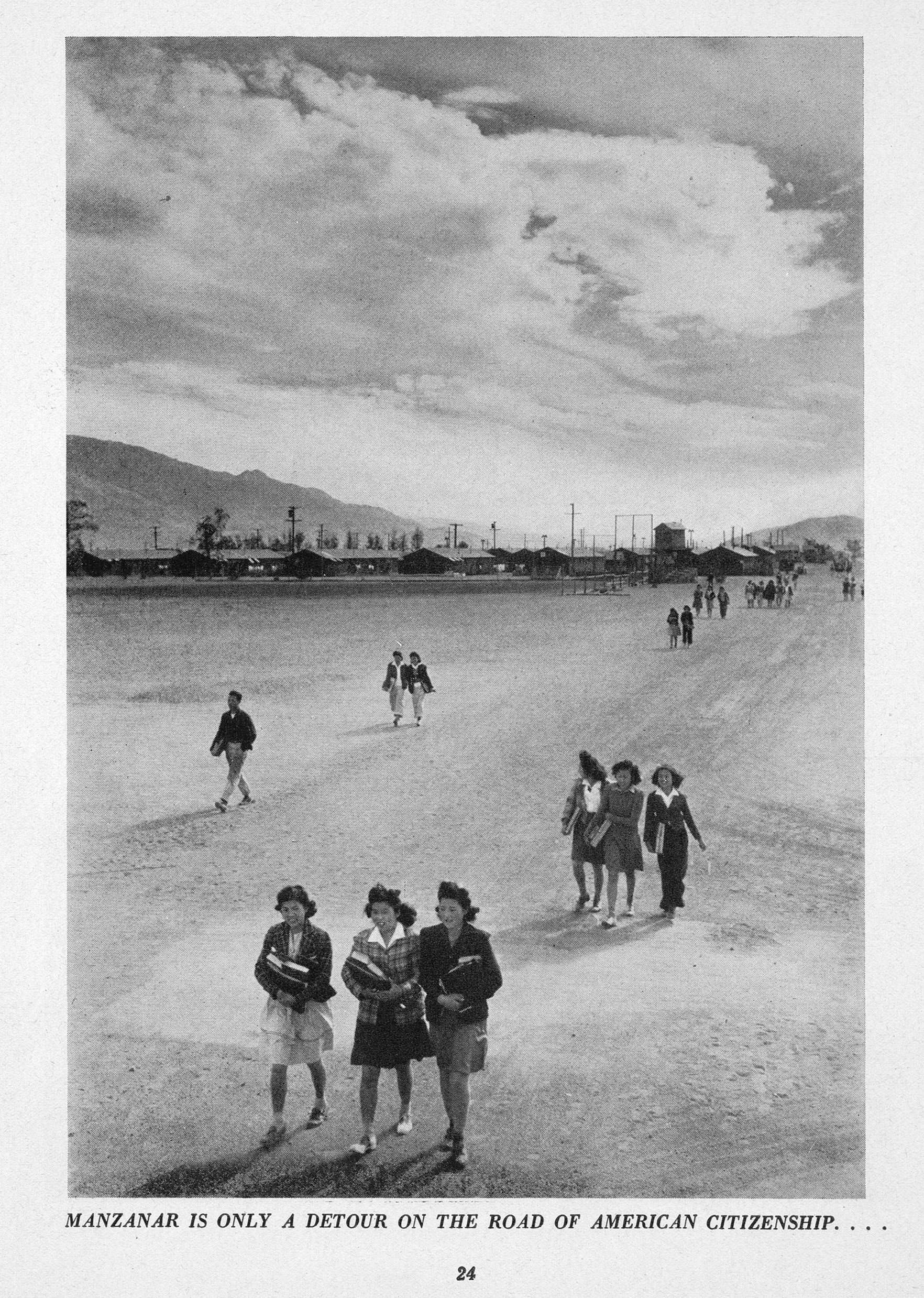
Ansel Adams, “Manzanar is Only a Detour on the Road of American Citizenship...”, Born Free and Equal,1944, p24. U.S. Camera, New York, Courtesy of The Library of Congress.

Installation View, Rich Land, Poor Land, Carriage Trade, Photo: Nicholas Knight.
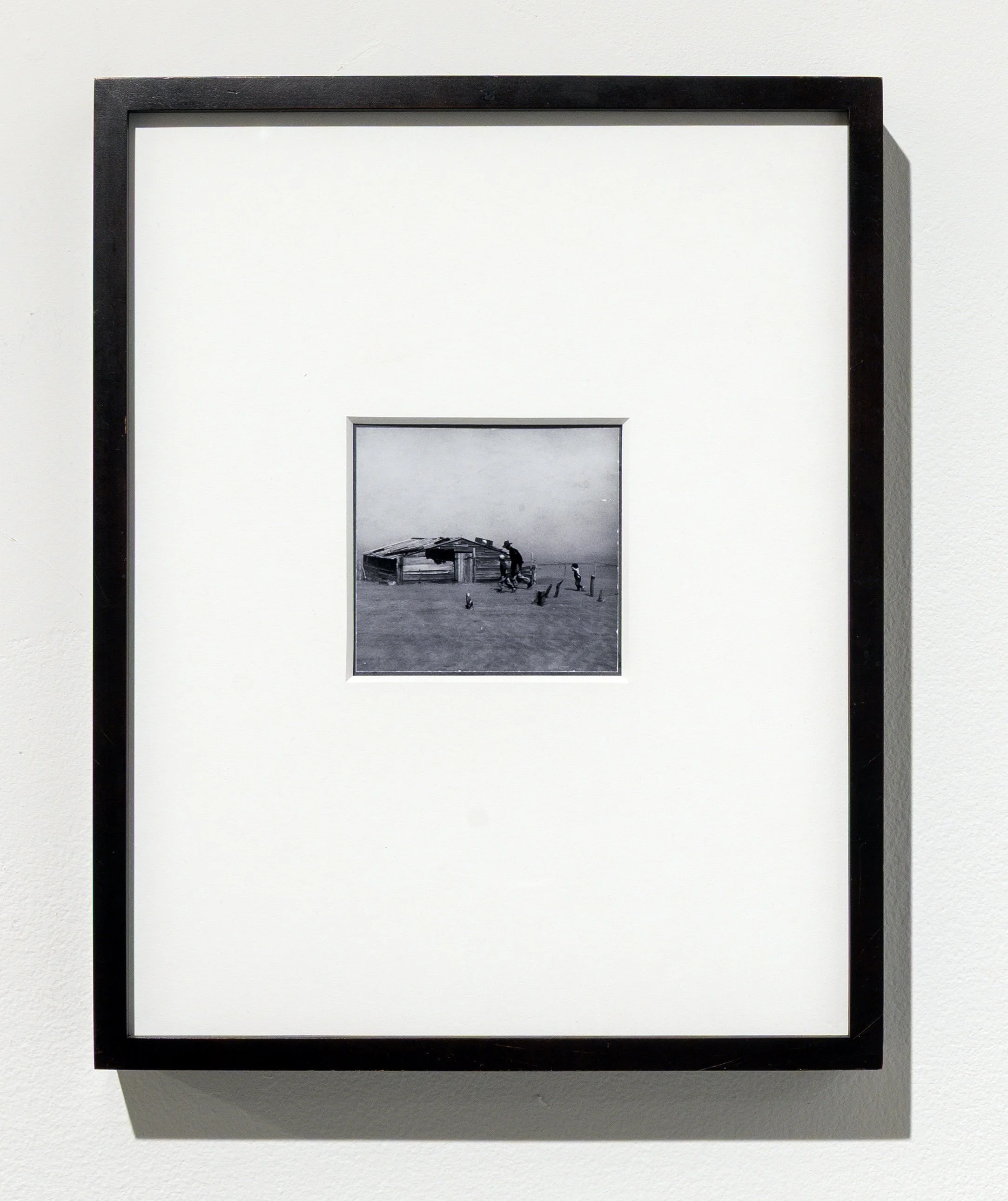
Arthur Rothstein, Farmer and sons walking in the face of a dust storm. Cimarron County, Oklahoma, 1936, Inkjet print, 3 3/4” x 4” (9.5 x 10.2 cm.), framed 14” x 11” (35.6 x 27.9 cm.) Courtesy of The Library of Congress. Photo: Nicholas Knight
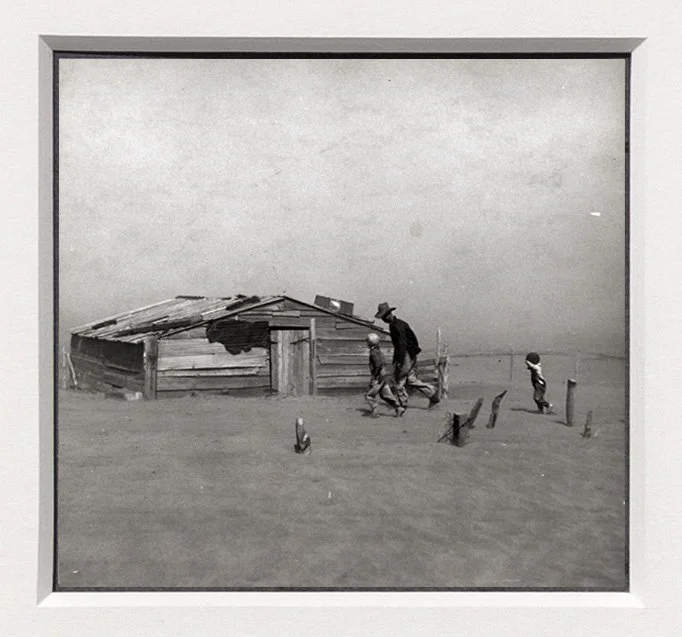
Arthur Rothstein, Farmer and sons walking in the face of a dust storm. Cimarron County, Oklahoma, 1936, Inkjet print, 3 3/4” x 4” (9.5 x 10.2 cm.), framed 14” x 11” (35.6 x 27.9 cm.) Courtesy of The Library of Congress. Photo: Nicholas Knight